Interstice: Thresholds Carved with Light and Time
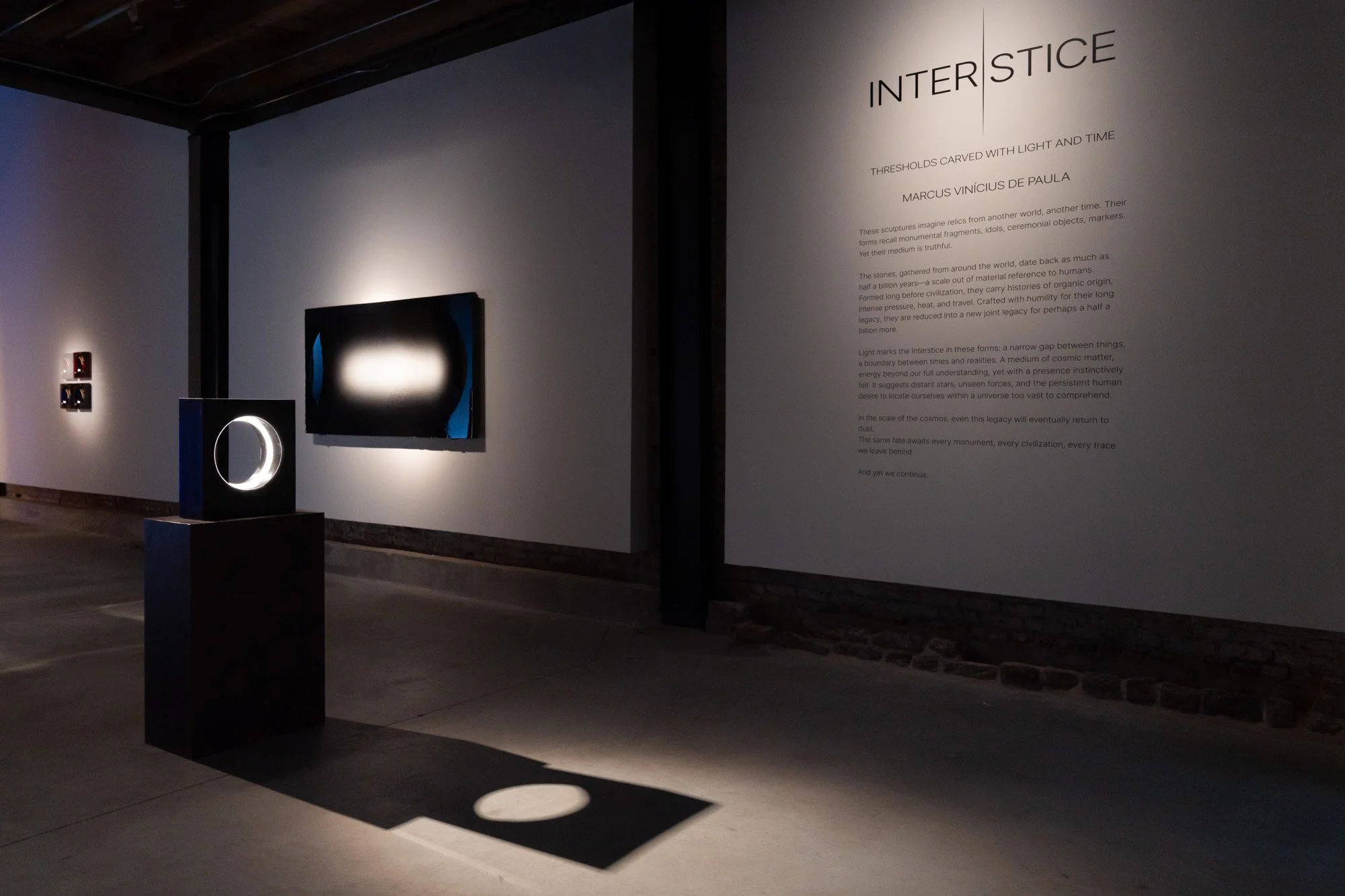
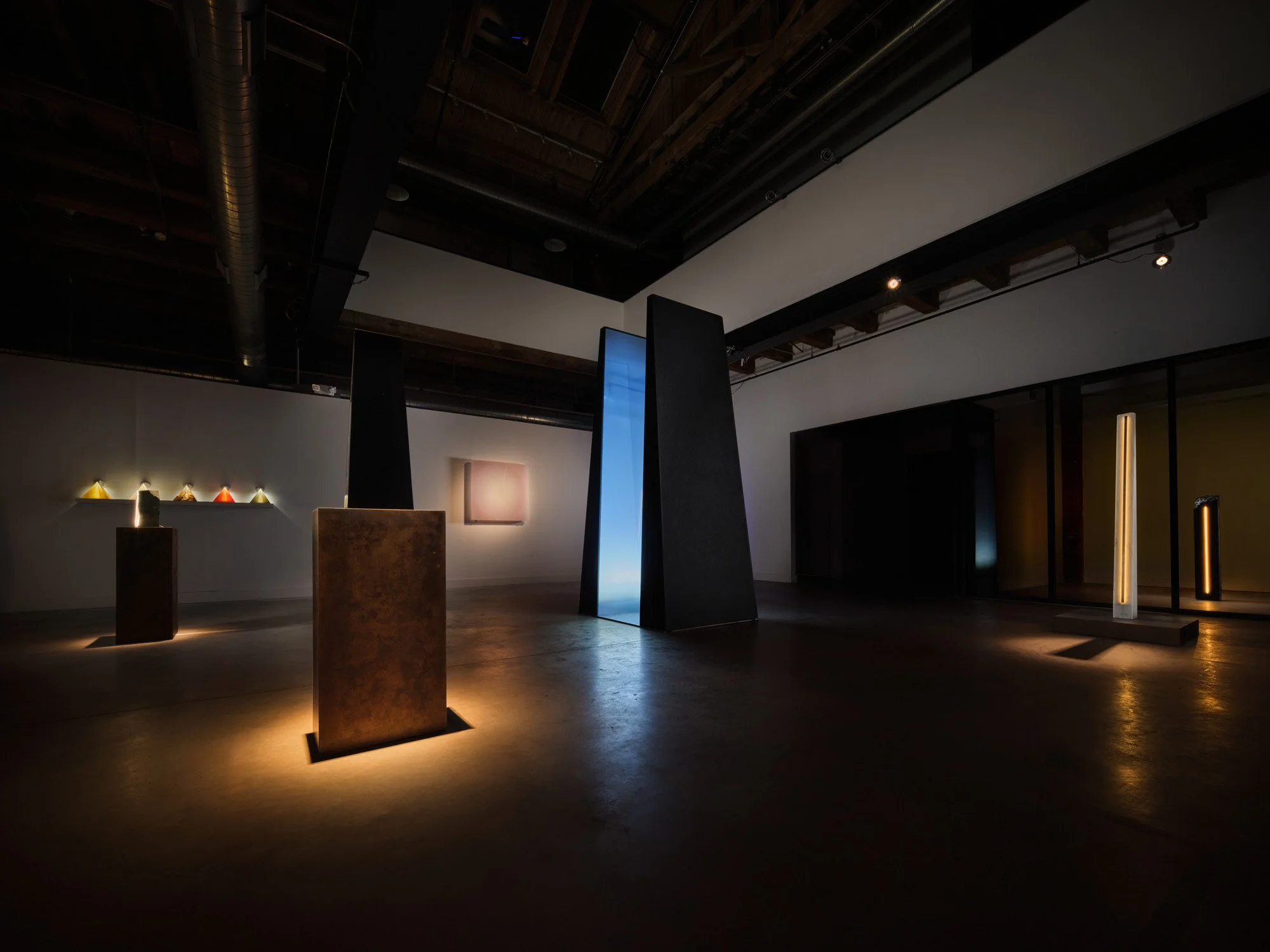
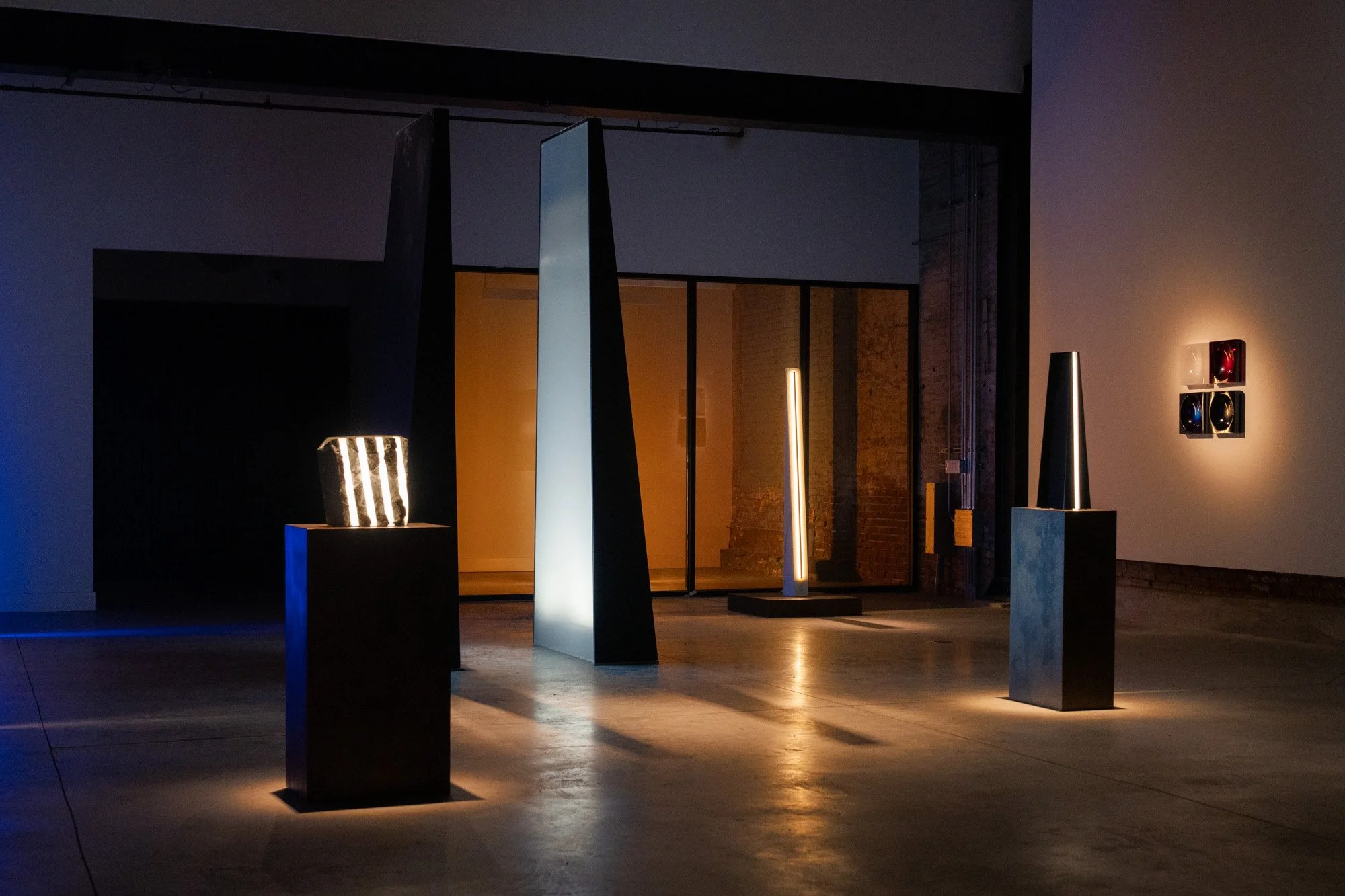
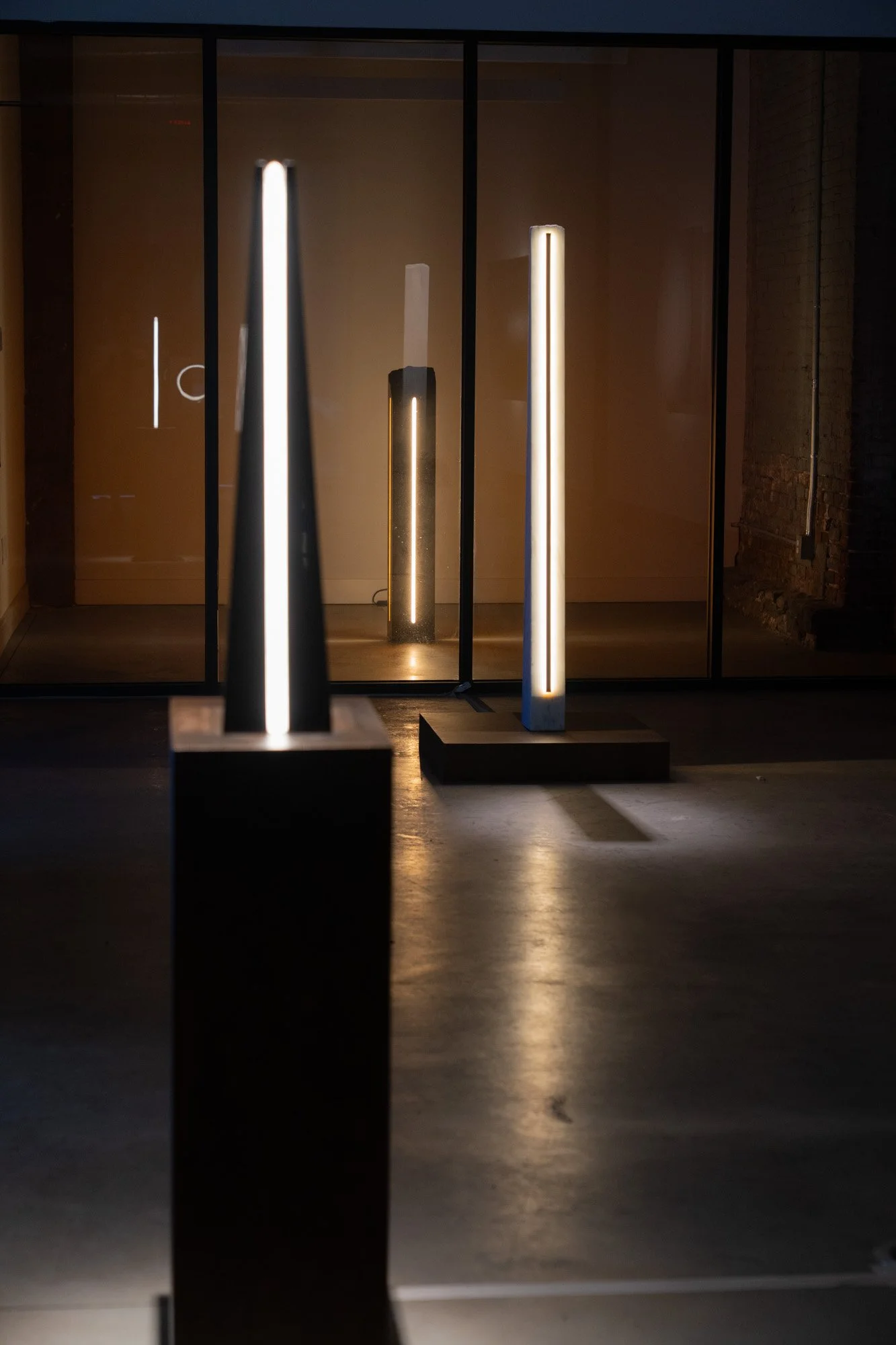
Interstice: Thresholds Carved with Light and Time
June 11, 2026 - August 14, 2026
Philadelphia
Opening Reception will be Held on June 11th, 5:30 - 7:30PM
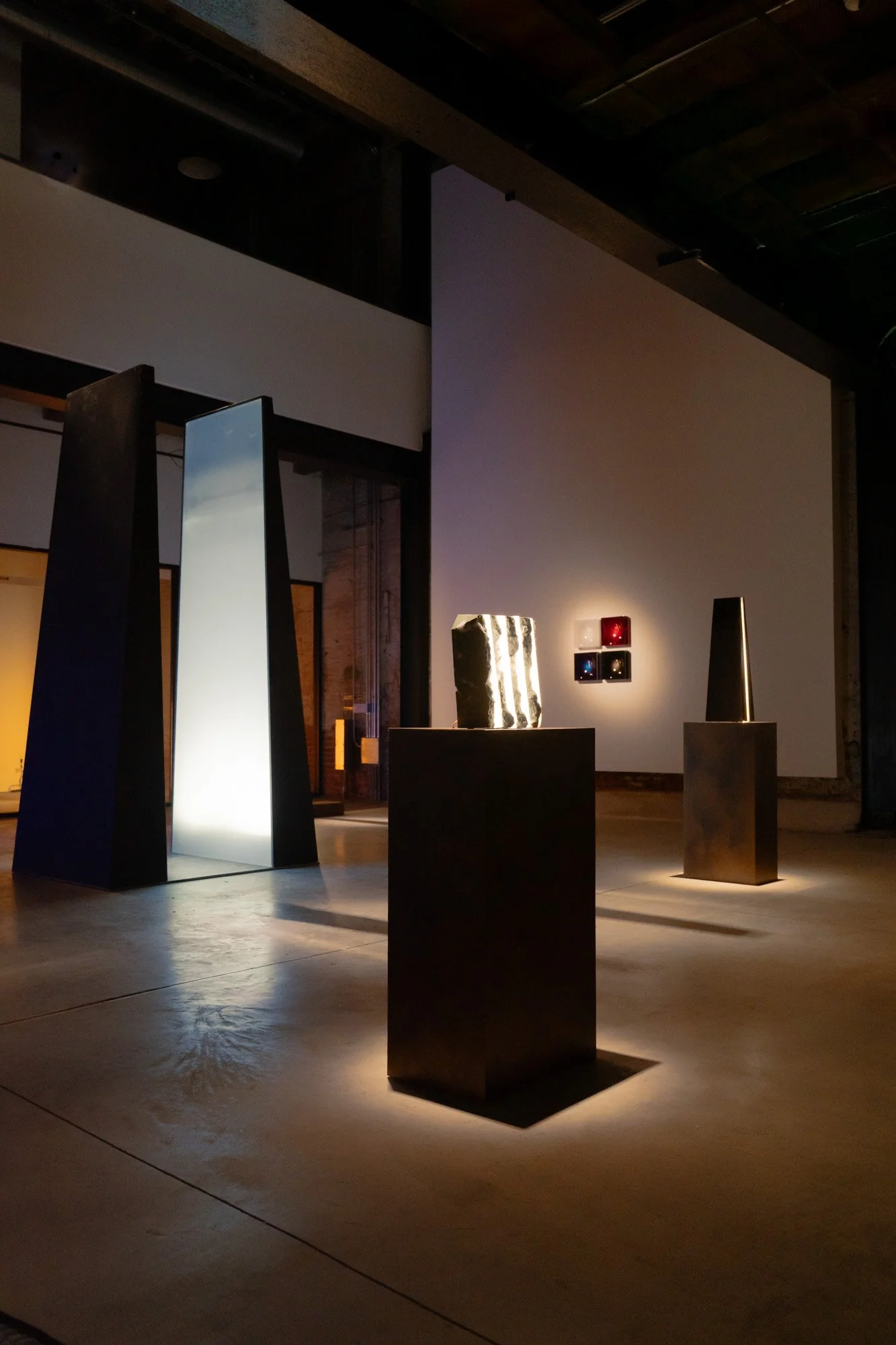
Interstice: Thresholds Carved with Light and Time is a solo exhibition of sculptural works by Brazilian-American artist Marcus Vinícius De Paula. In his first major solo exhibition with the gallery, De Paula presents a new body of work created specifically for the exhibition, alongside the first indoor presentation of Titan, a 10-foot-tall, 3,000-pound stone structure. Shaped in part by a childhood spent hearing stories from his father, who directed missions to Mars at NASA, De Paula’s sculptures set the fragility of human civilization against the immense scale of geological and cosmic time. Through the fusion of ancient materials and luminous technologies, these monumental works explore humanity’s place within a vast temporal continuum, appearing as relics that exist somewhere between the primordial past and an imagined future.
Born in California in 1986 and based in New York, De Paula’s practice is shaped by the dual influences of art and engineering. His mother is a painter and ceramicist, while his father rose from a small town in São Paulo to direct missions to Mars at NASA. Growing up surrounded by space imagery and engineering problem solving gives De Paula an early awareness of the cosmos and humanity’s small position within it, while his mother’s artistic practice fosters an appreciation for craft and material sensitivity. These perspectives converge in sculpture, allowing him to unite technical precision with artistic expression. Brazilian cultural memory also informs the physical presence of De Paula’s imagined relics. As a teenager visiting family in Rio de Janeiro, he spent hours absorbing the monumental architecture of Brazil’s modernist and brutalist buildings. Those impressions of massive forms and exposed materiality continue to inform the reduced geometry and gravity of his sculptures.
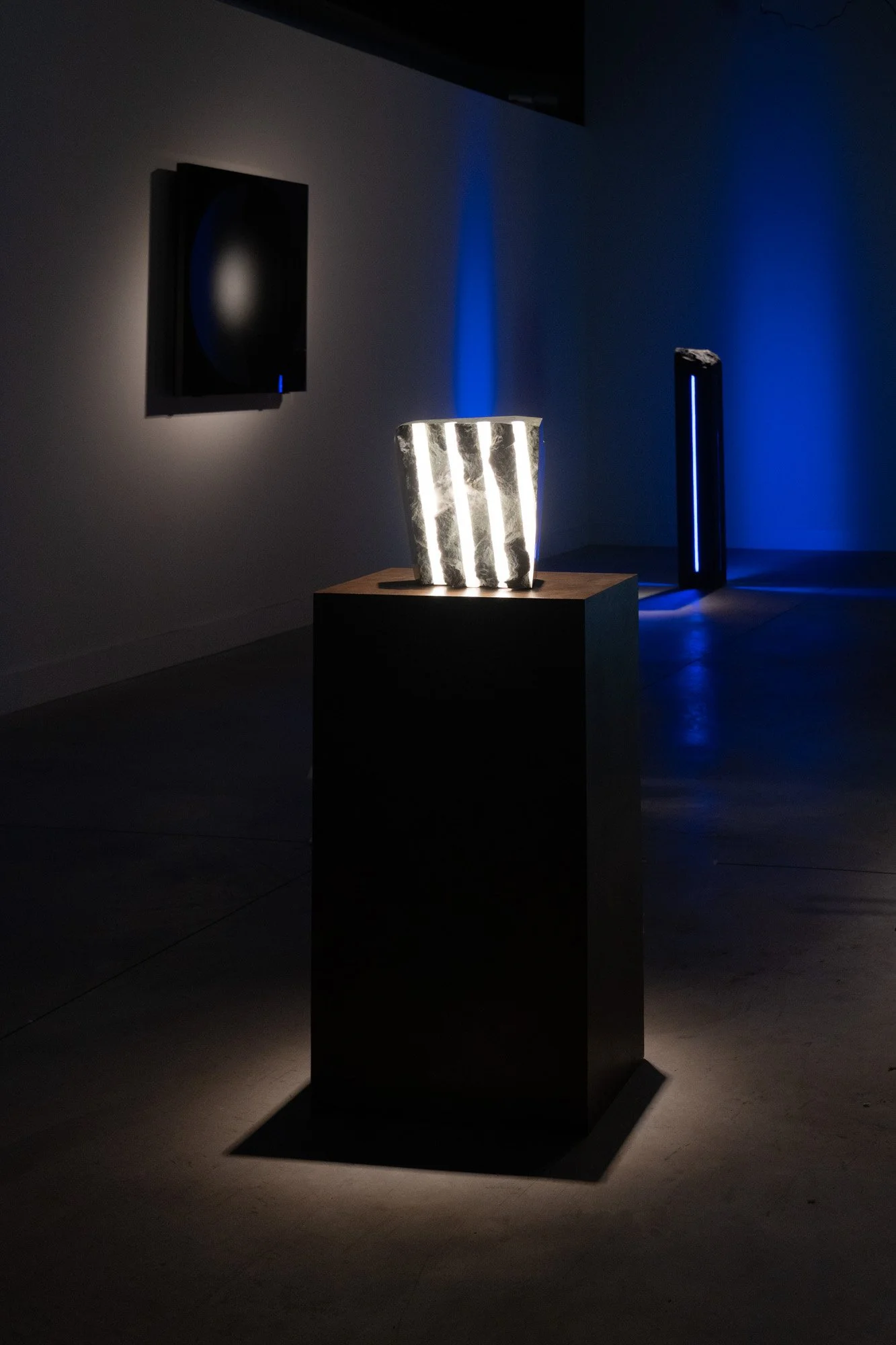
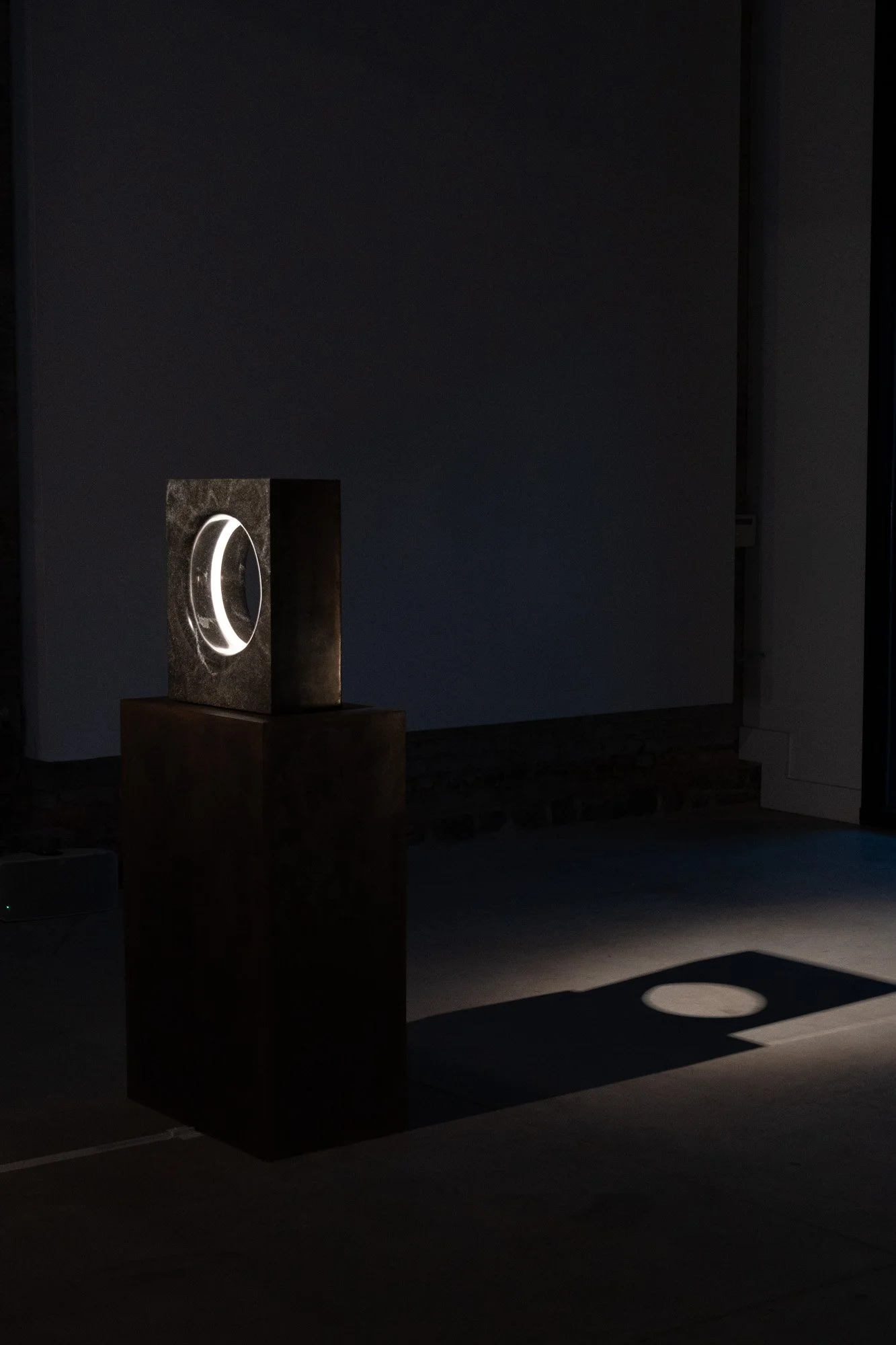
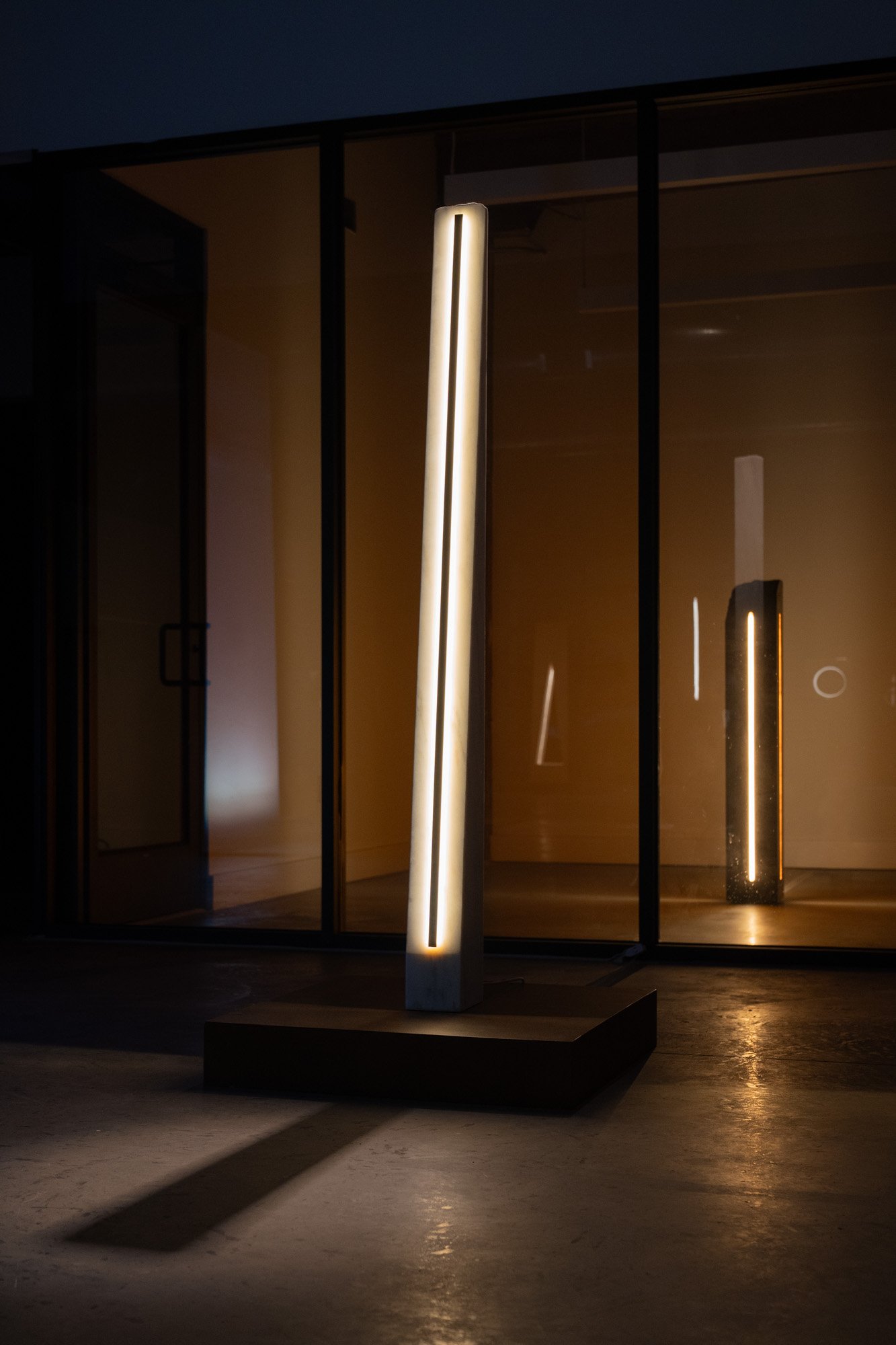
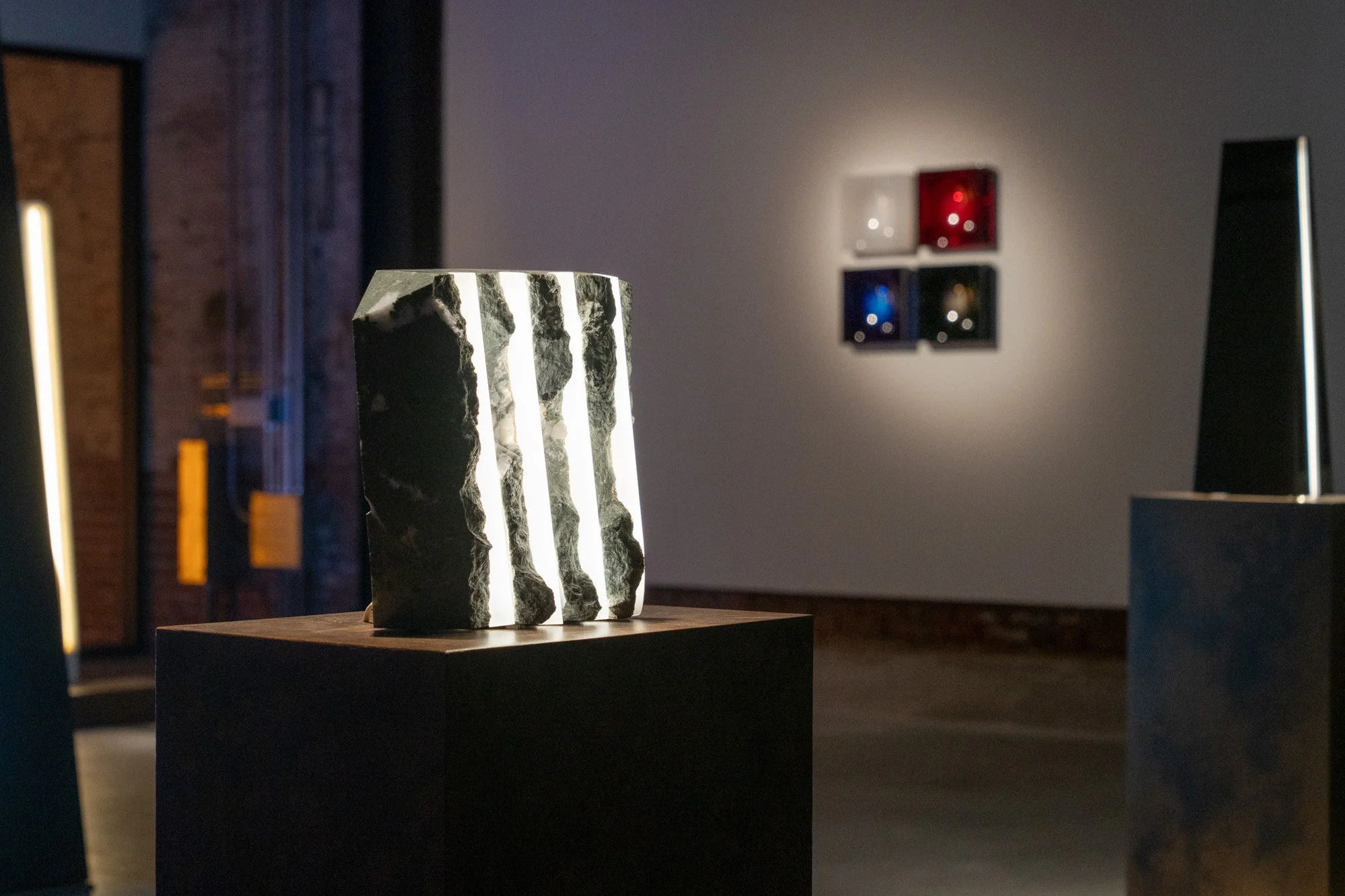
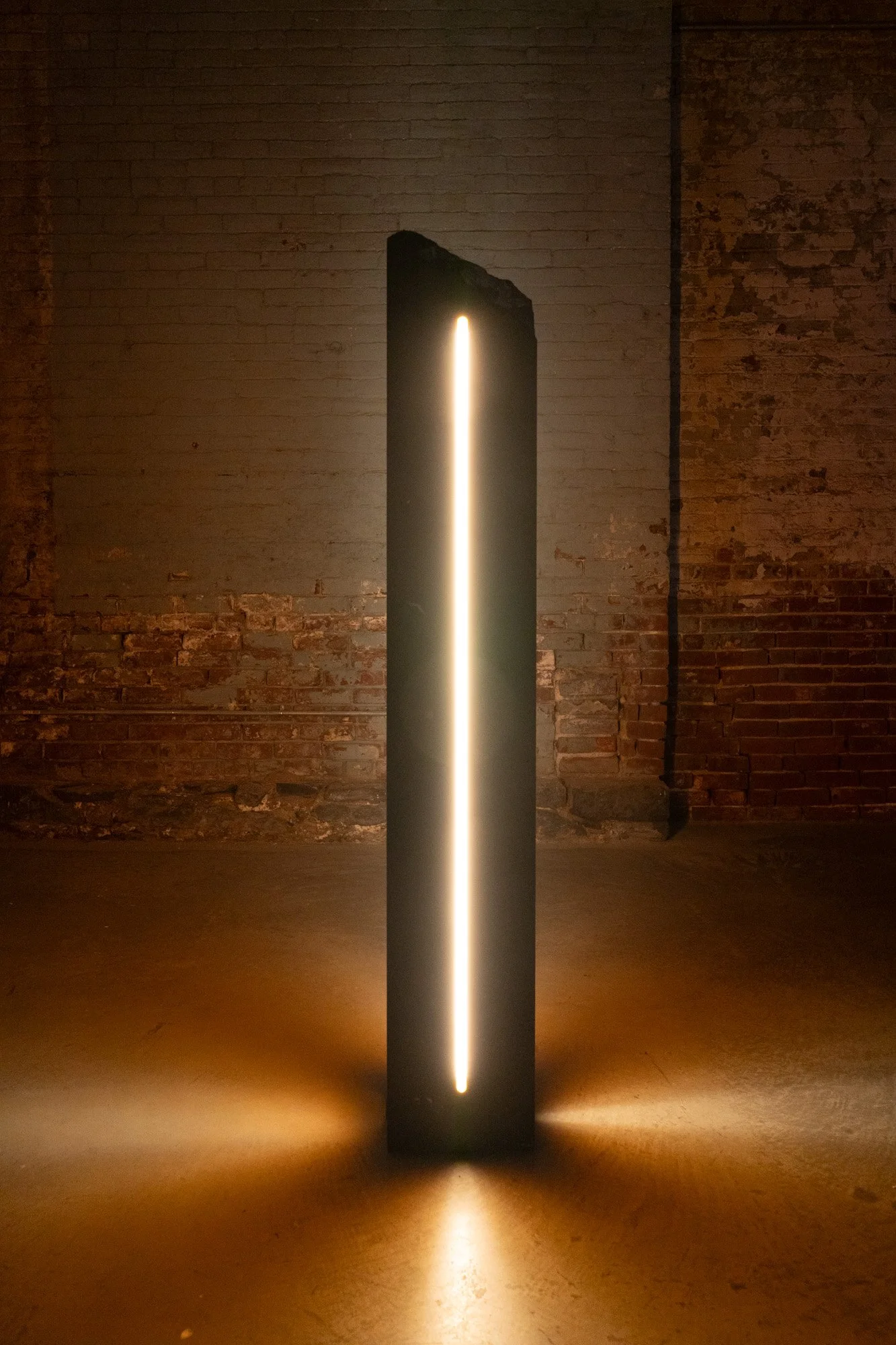
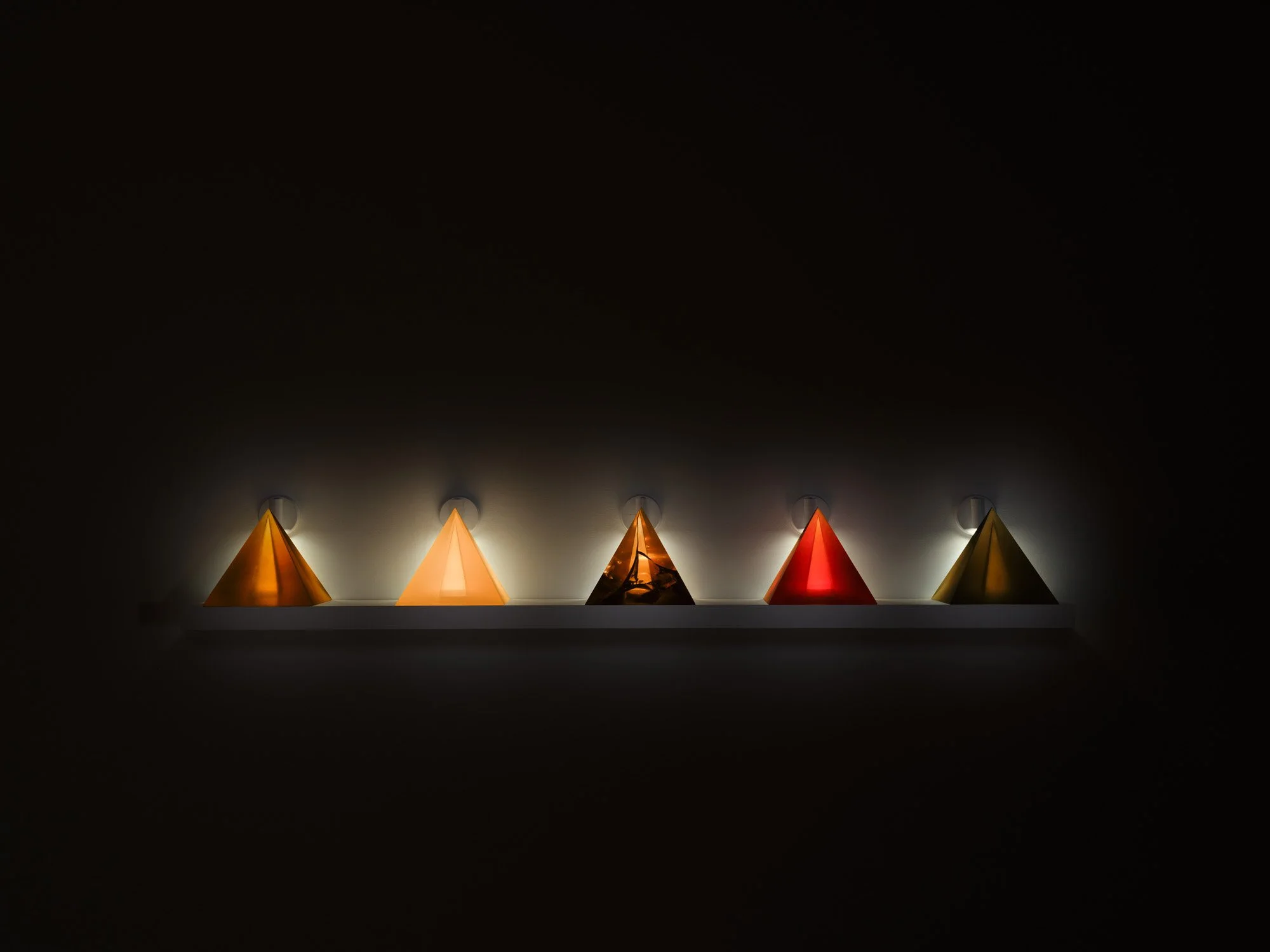
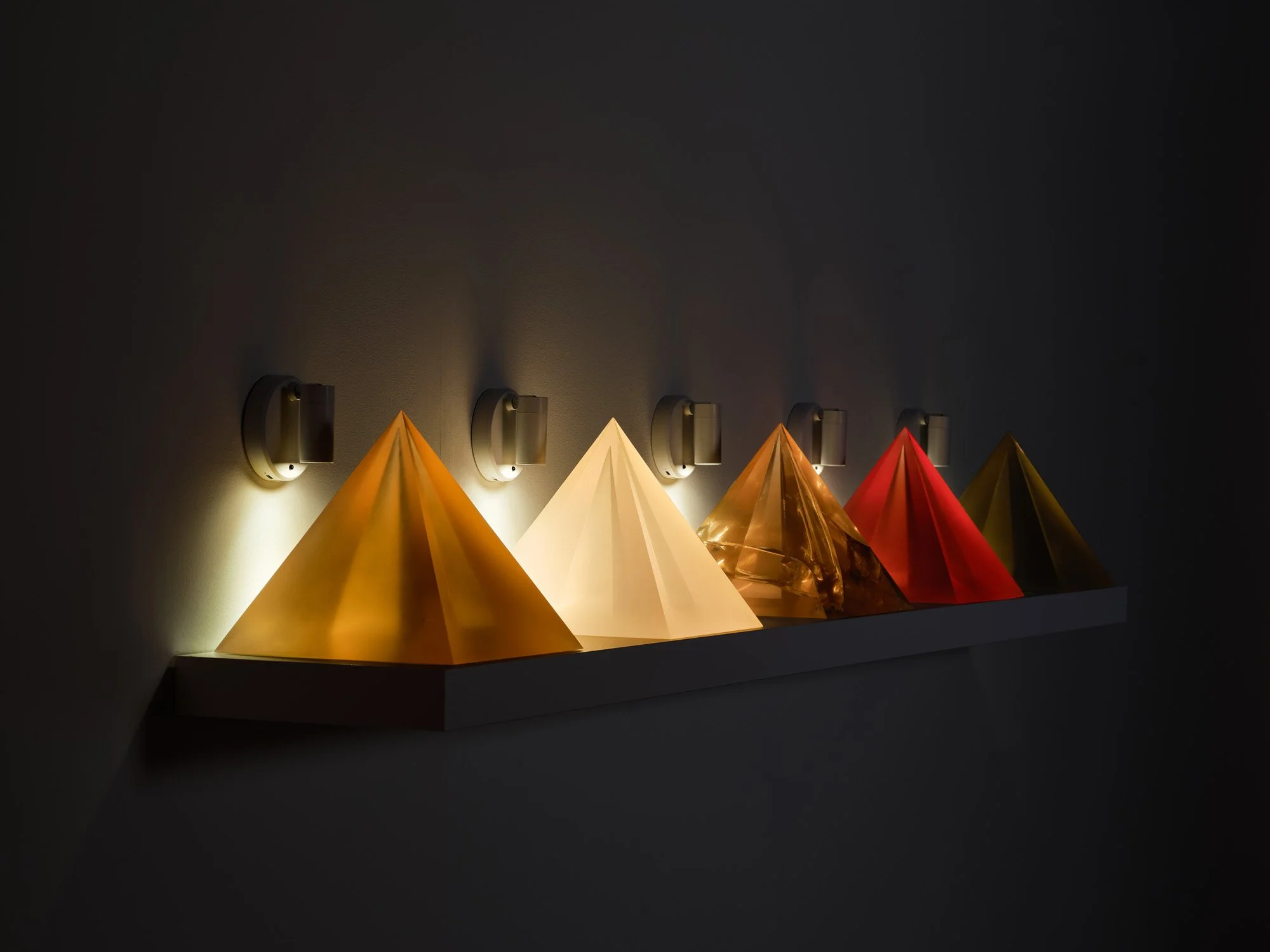
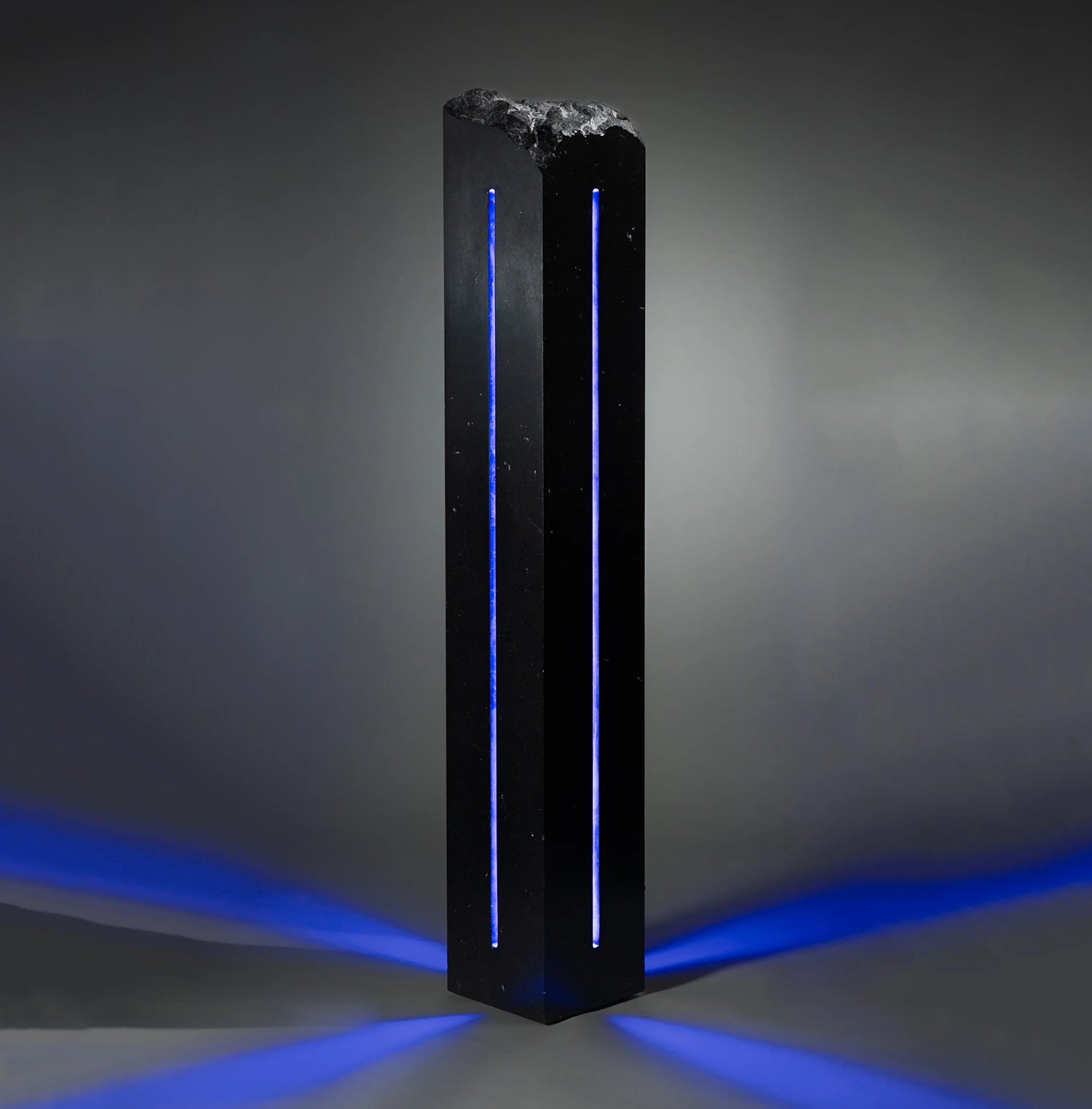
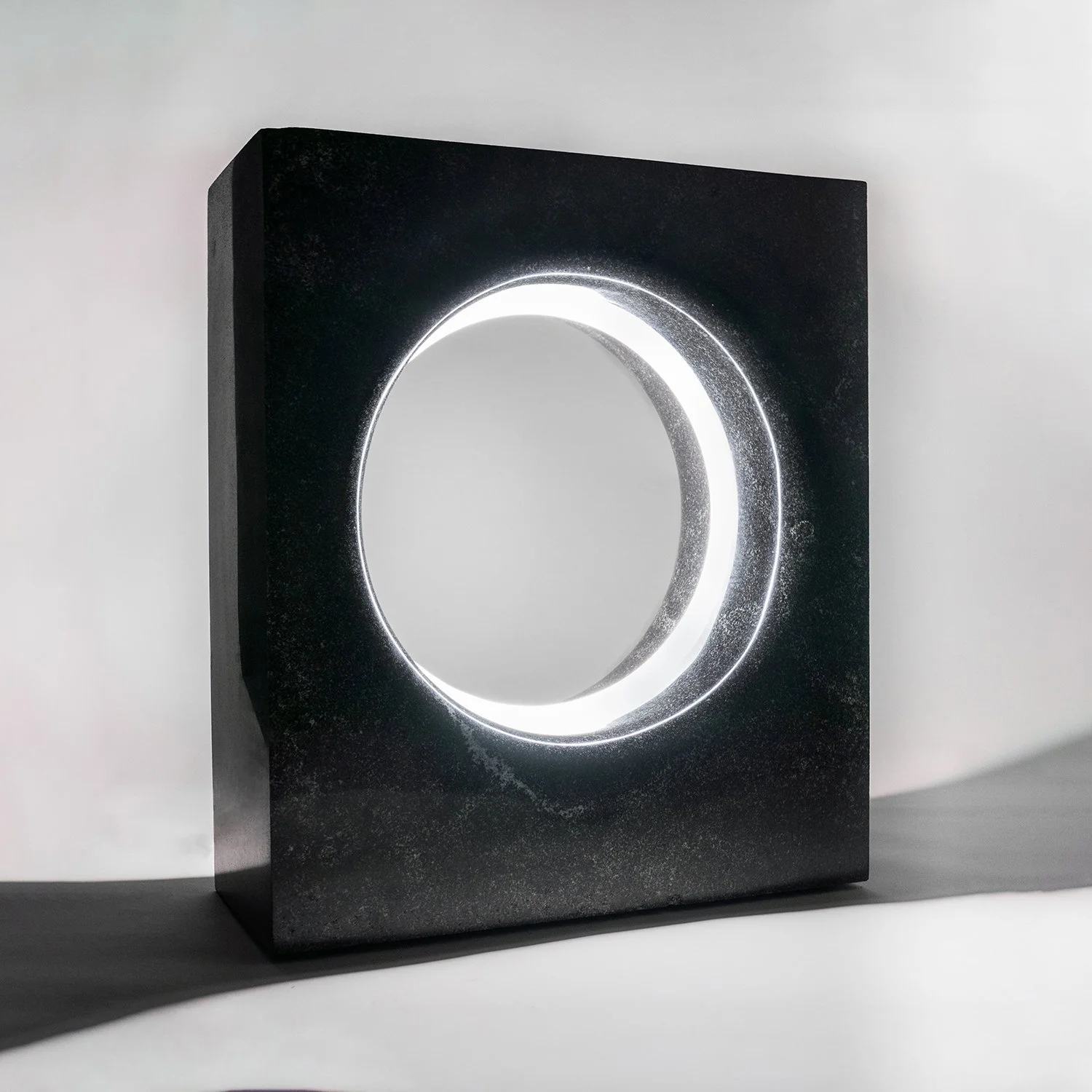
De Paula begins with materials that carry their own histories. Central to his work is the use of volcanic rock, granite, and alabaster, some formed hundreds of millions of years ago. These ancient stones become the foundation for sculptures embedded with lines of radiant light. Drawing on more than fifteen years designing lighting for theater, film, and live performance, De Paula treats light as a central artistic medium, integrating illumination directly into the sculptural form. Glowing lines reveal the internal structure of the stone while evoking the visual language of space photography and science fiction cinema, creating objects that feel both ancient and otherworldly.
The resulting sculptures occupy a space between object and experience, aligning his practice conceptually with James Turrell and Anish Kapoor, who transform sculpture into perceptual encounters rather than purely material forms. Like Turrell’s environments, De Paula’s works use light to heighten the viewer’s awareness of space and perception, while the monumental stone forms echo Kapoor’s investigations of void, reflection, and spatial distortion. As viewers move around them, surfaces shift from opaque mass to luminous portal, emphasizing that the sculpture is inseparable from the surrounding architecture, atmosphere, and the physical presence of the viewer.
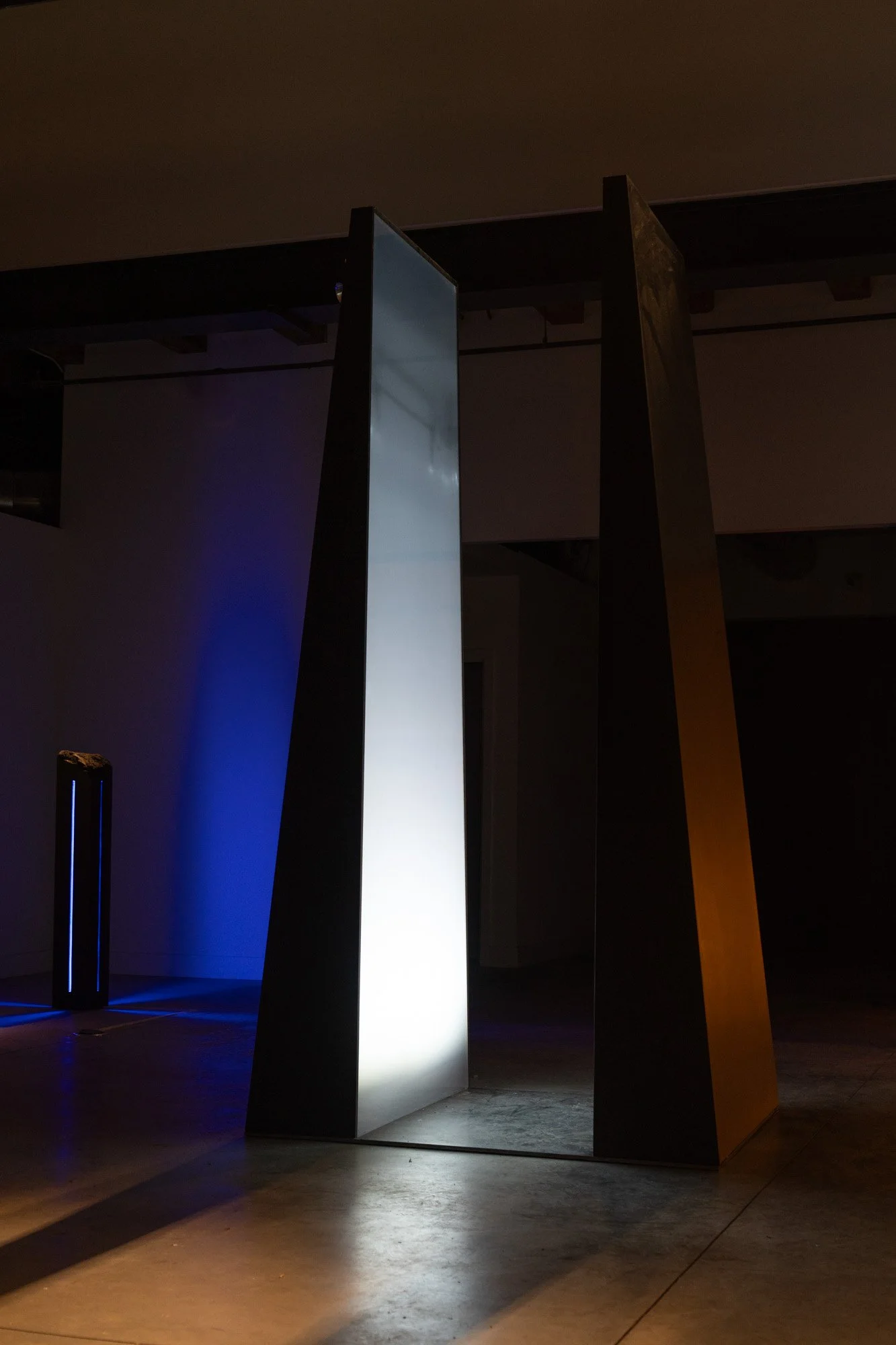
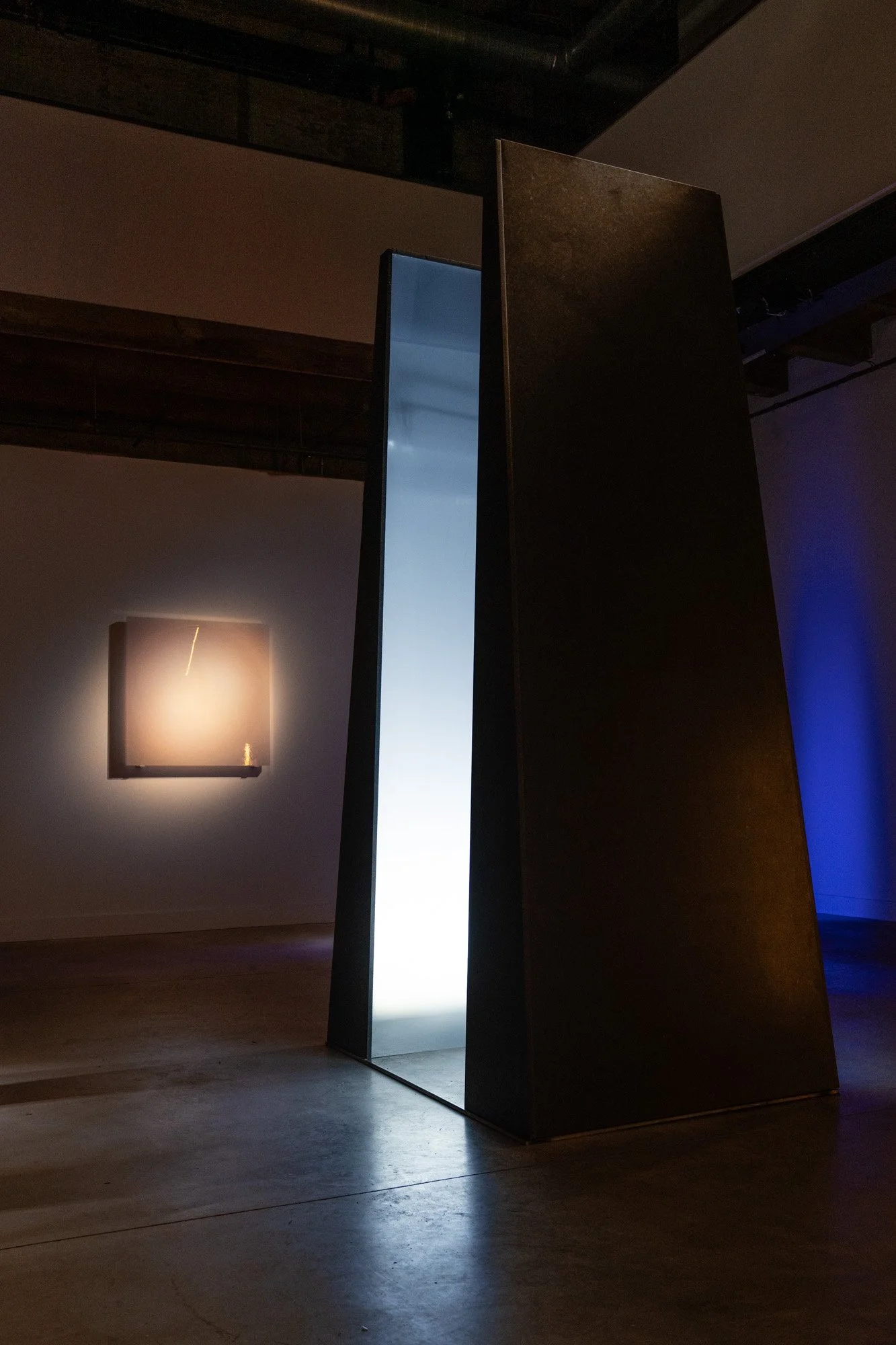
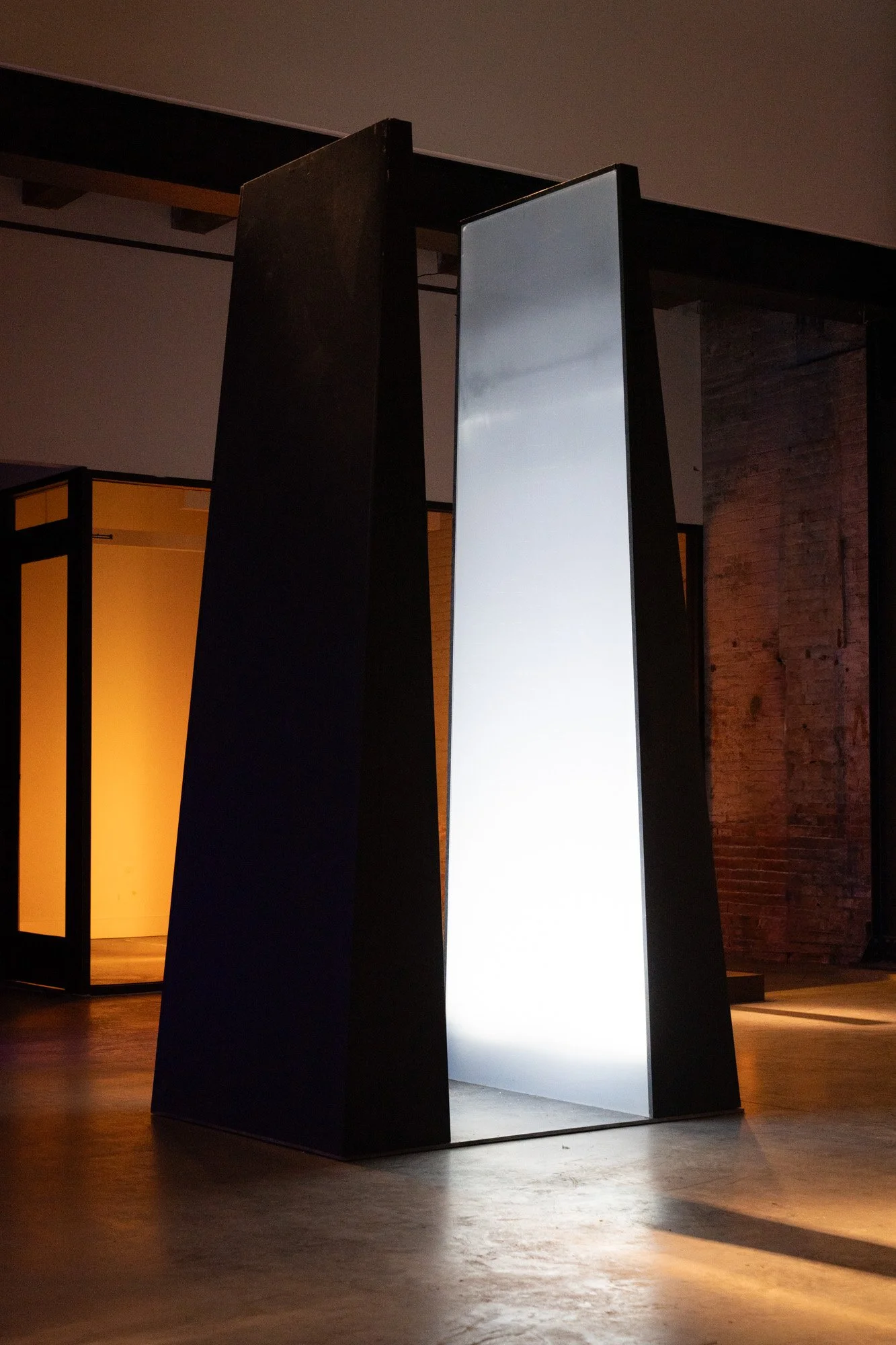
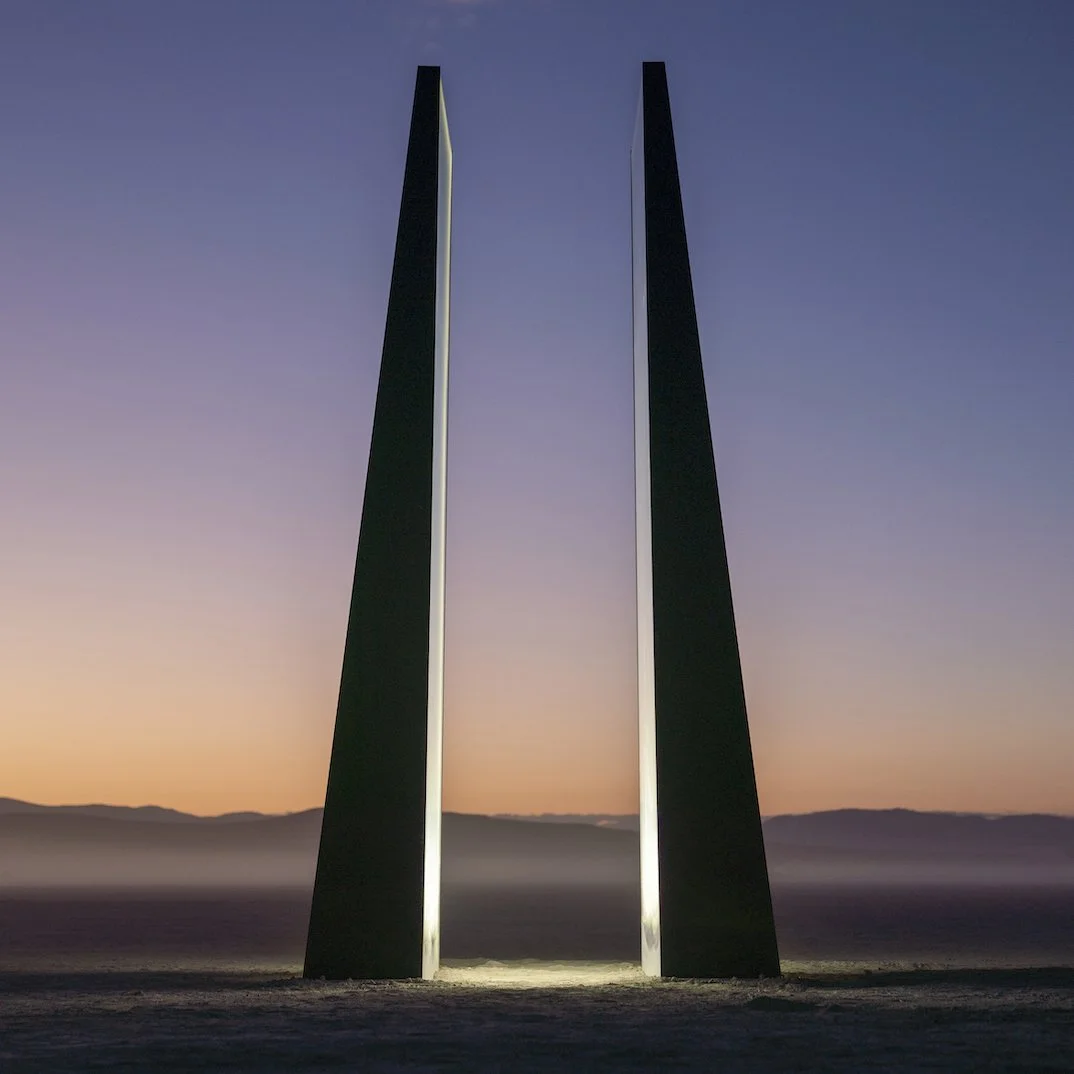
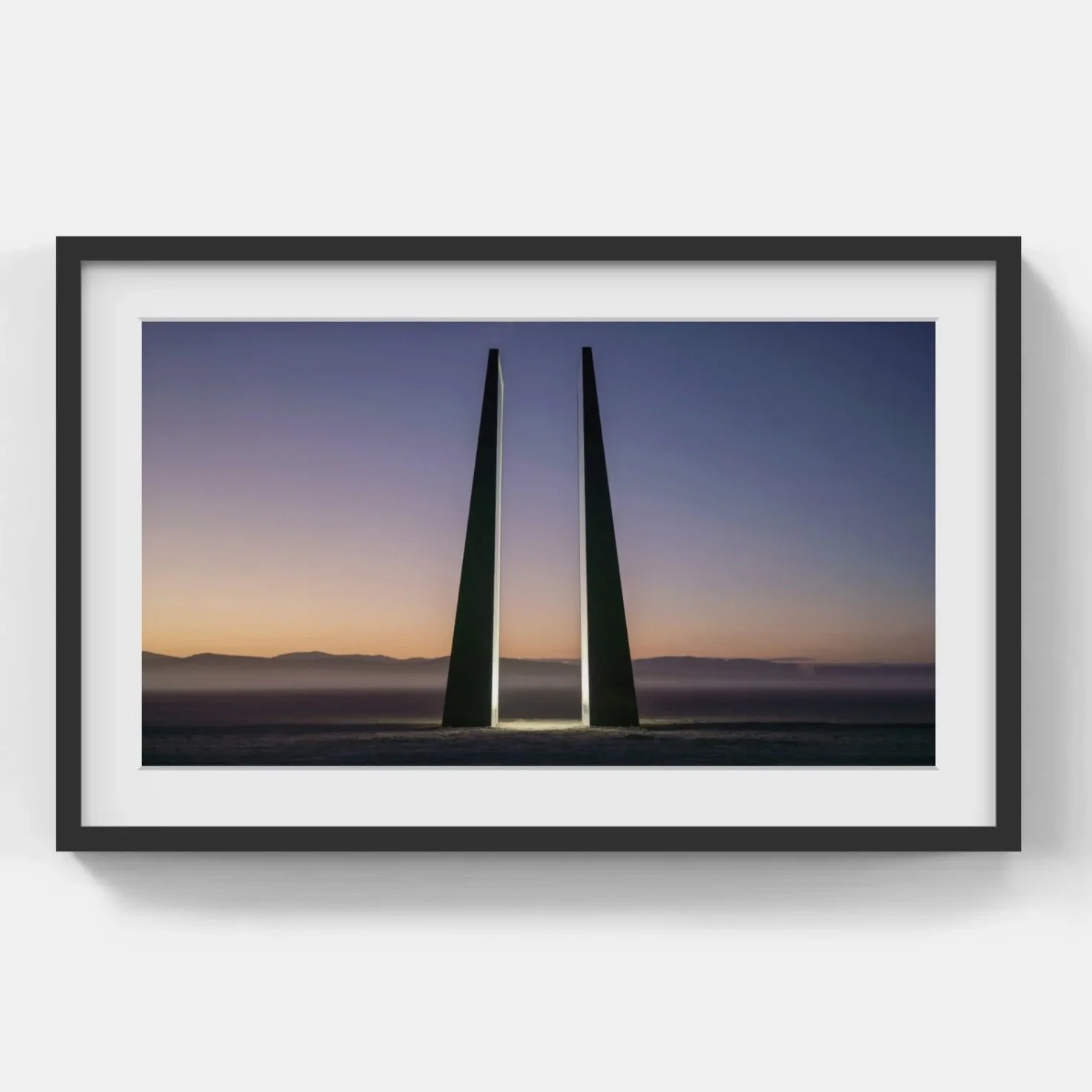
Anchoring the exhibition is Titan, an immersive monumental-scale sculpture first exhibited at Burning Man in 2022. The work’s towering ten-foot structure is carved from 500 million-year-old black granite. Two monumental stone pillars frame a narrow passage that leads to a mirrored interior chamber. By day the reflective surface captures the surrounding environment, while at night the interior transforms into a luminous field of light. The experience shifts from a sense of physical constraint between the massive forms to a perception of boundlessness within the illuminated core, inviting viewers to confront the tension between gravity, scale, and the vastness of space.
Many of the works take their names from the moons of Saturn, including Titan, Io Prime, Theia, Asteria, Rhea, Lapetus, and Coeus Ultor. These titles reference both mythological figures and distant celestial bodies. The sculptures stand like monolithic artifacts that feel simultaneously archaeological and speculative.
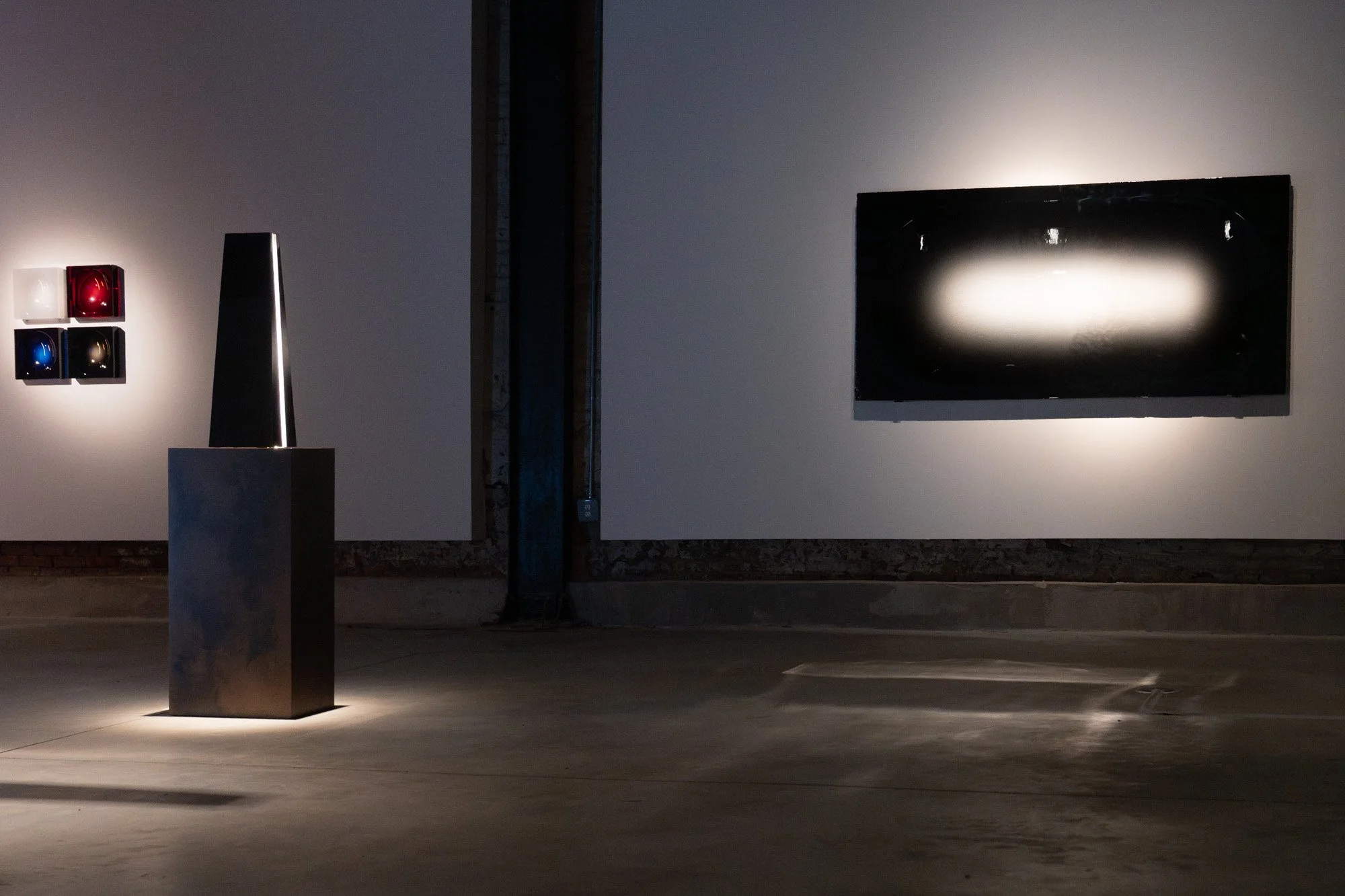
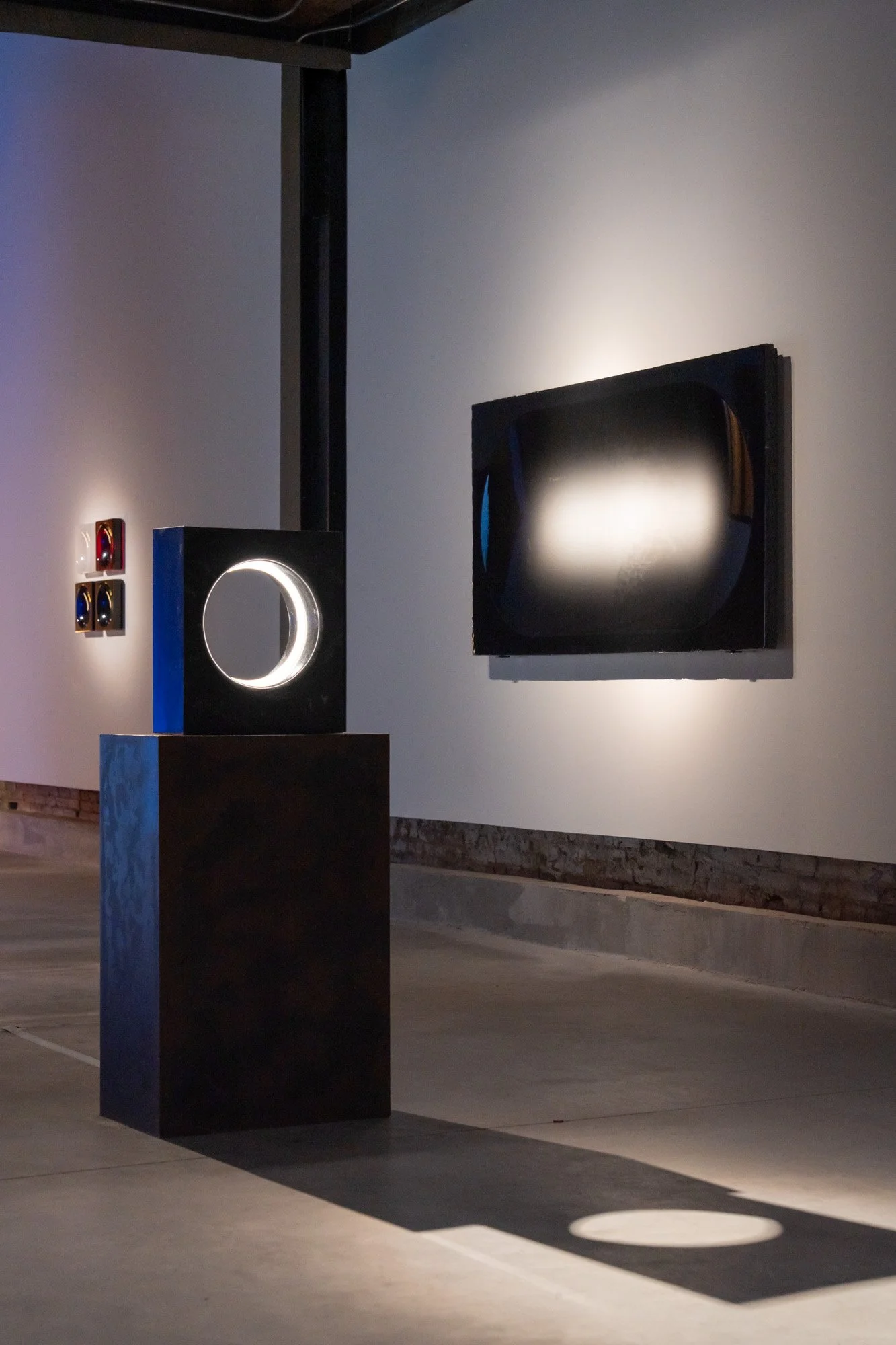
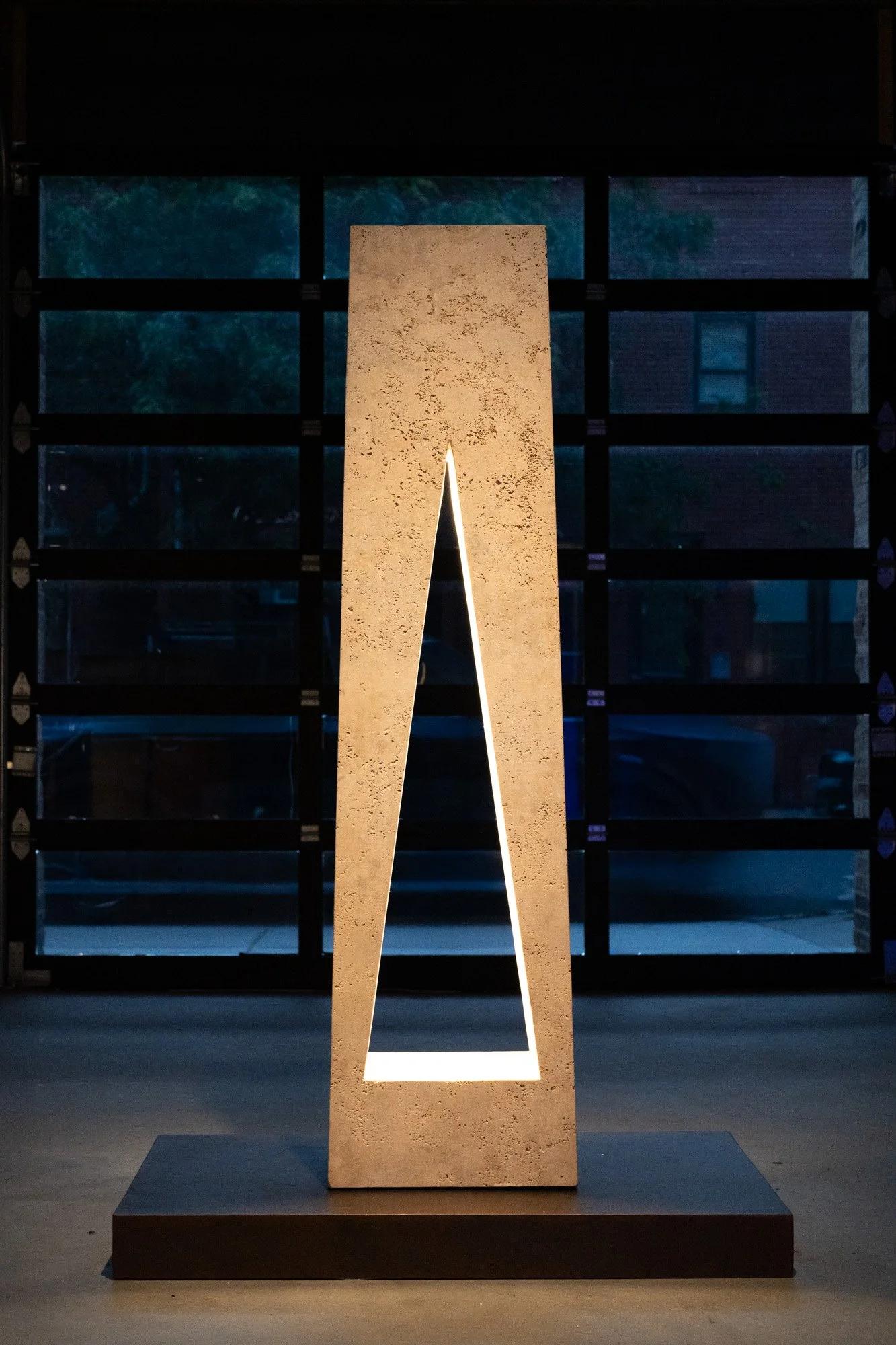
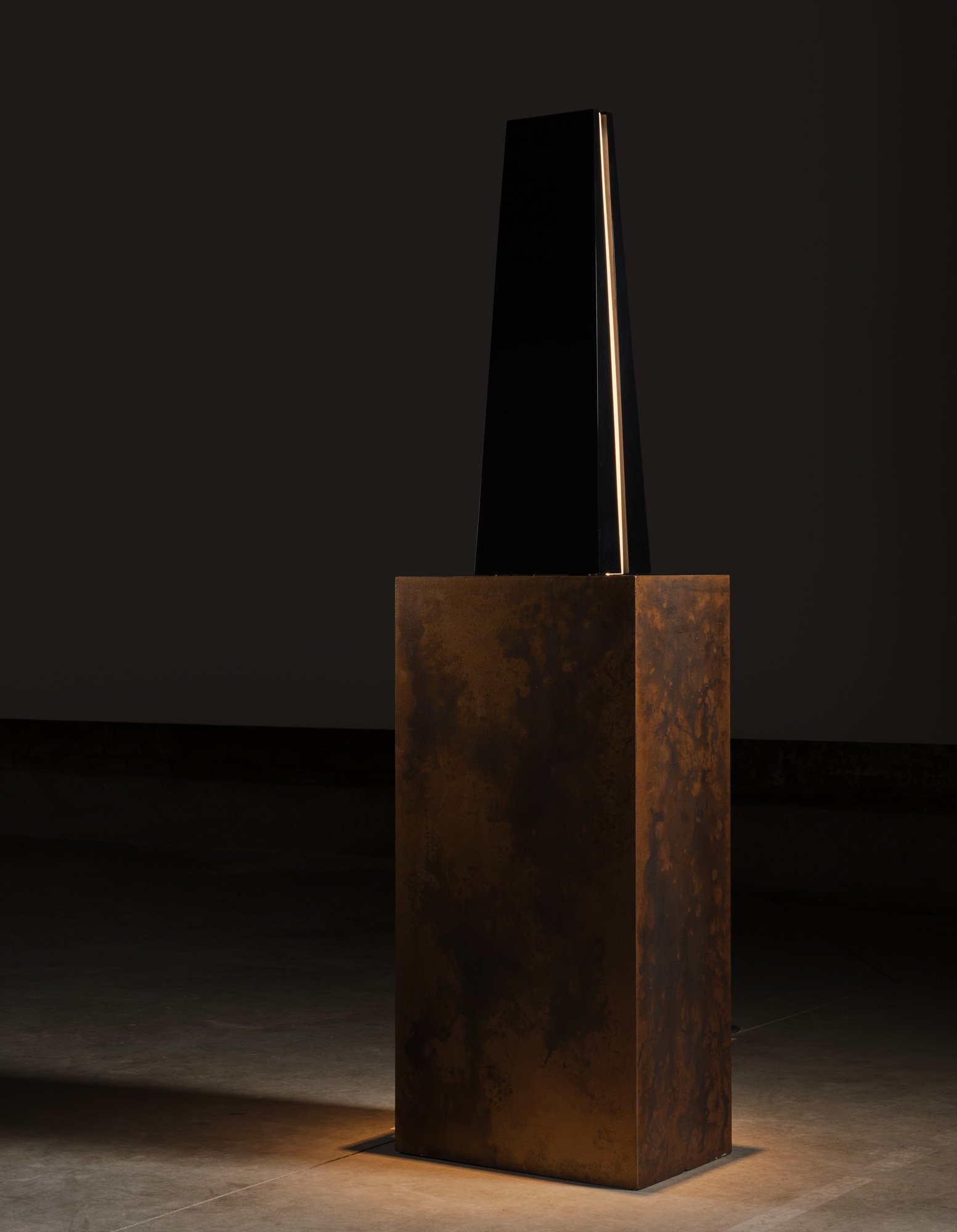
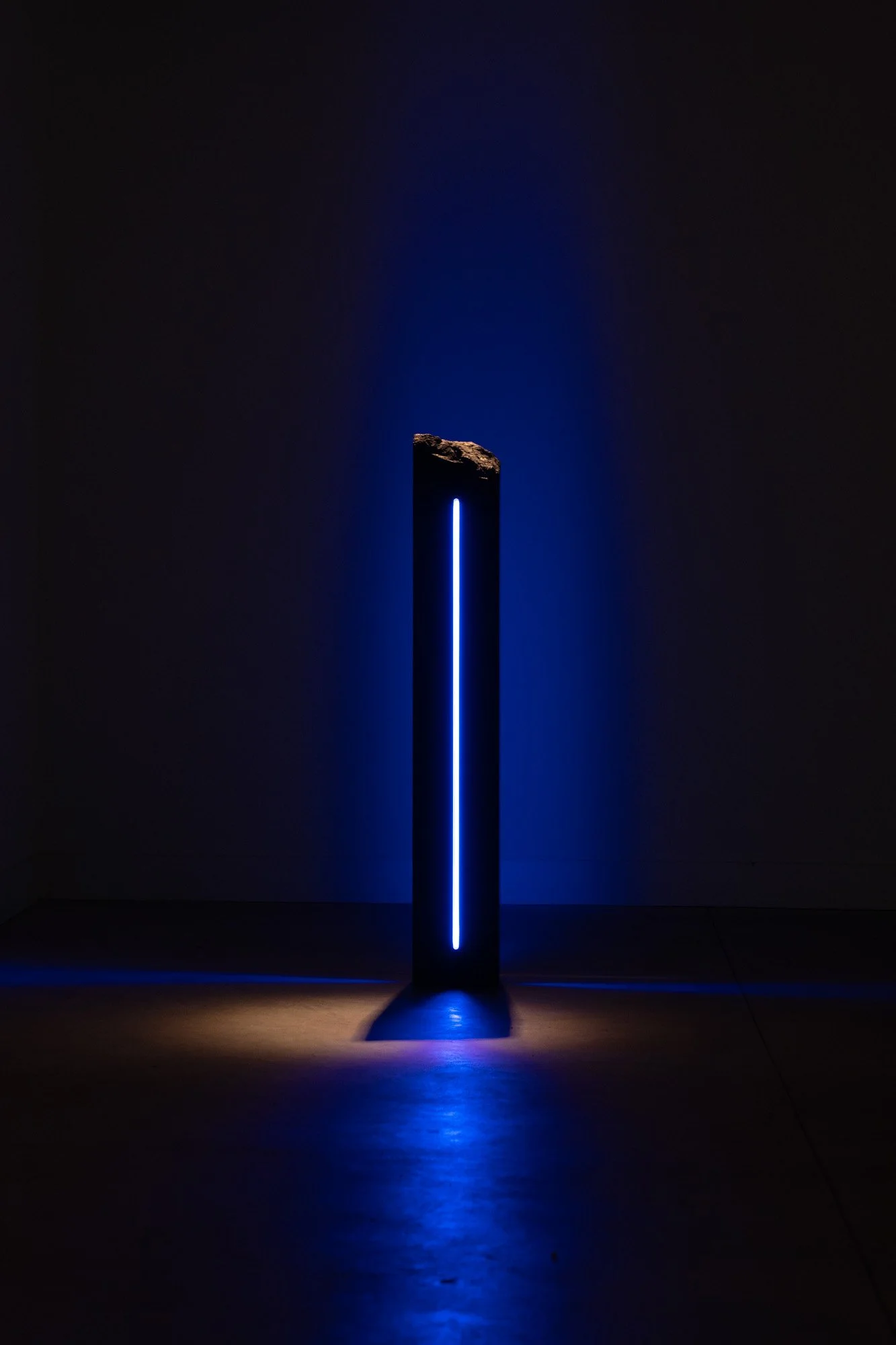
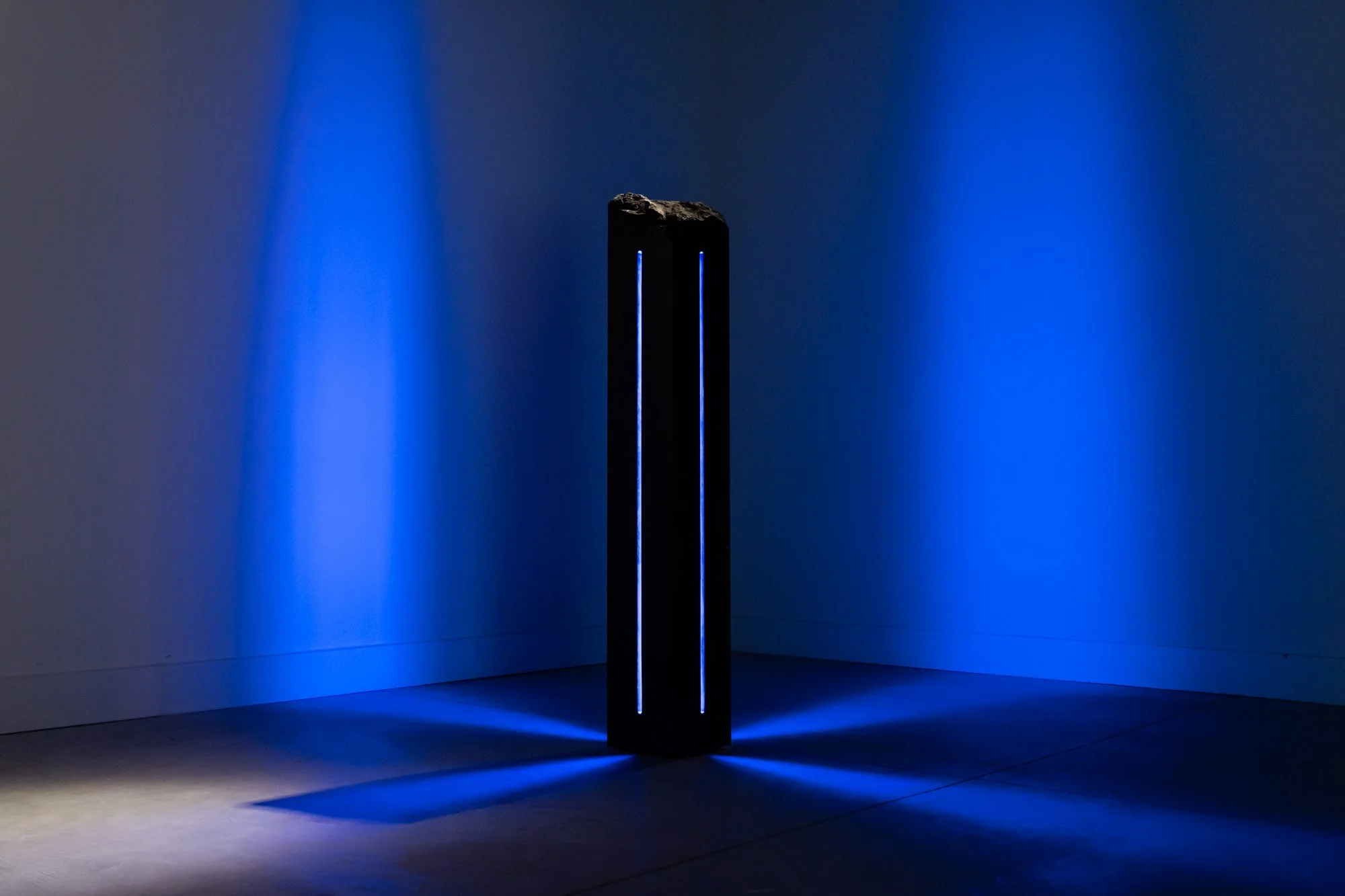
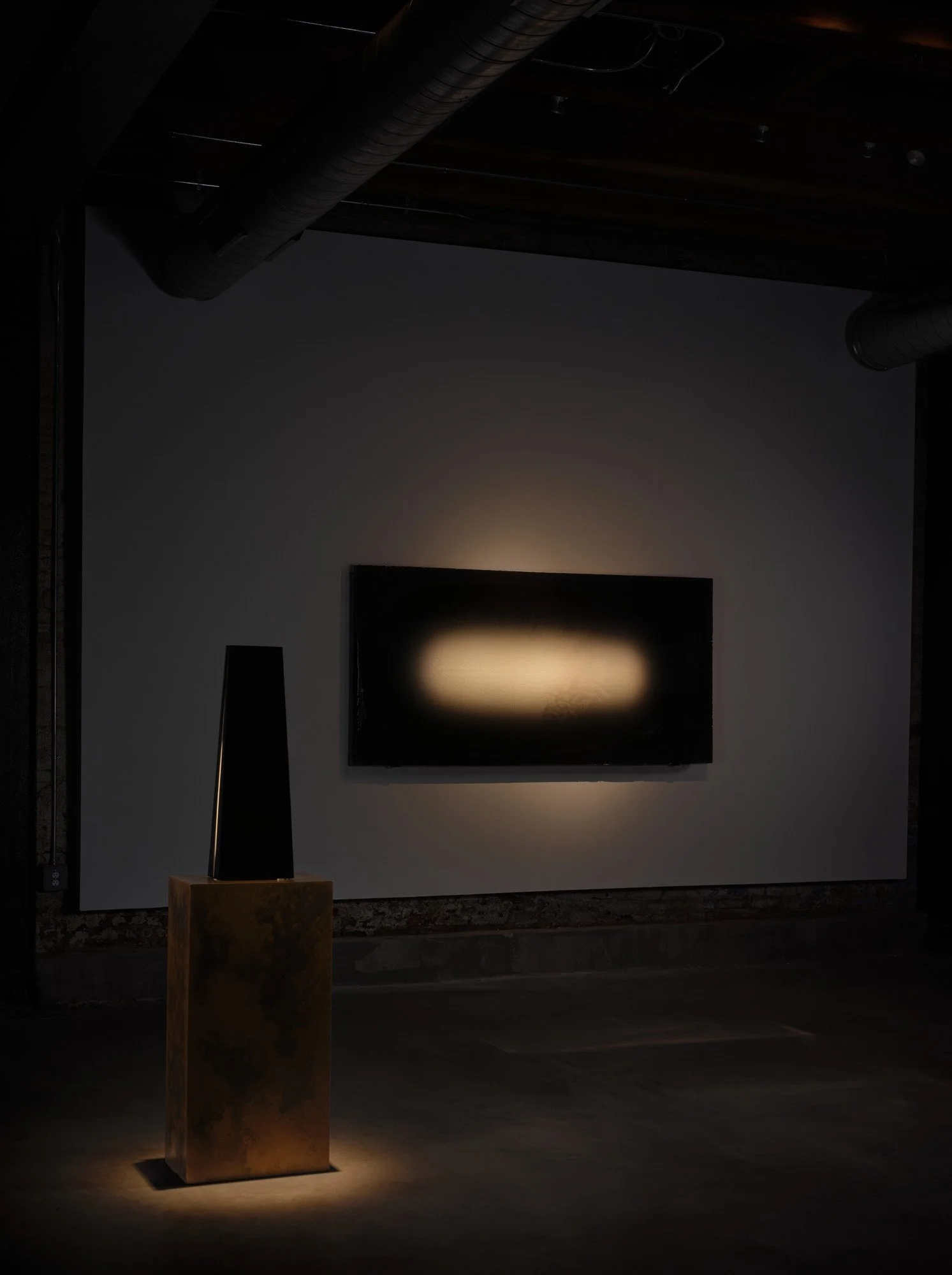
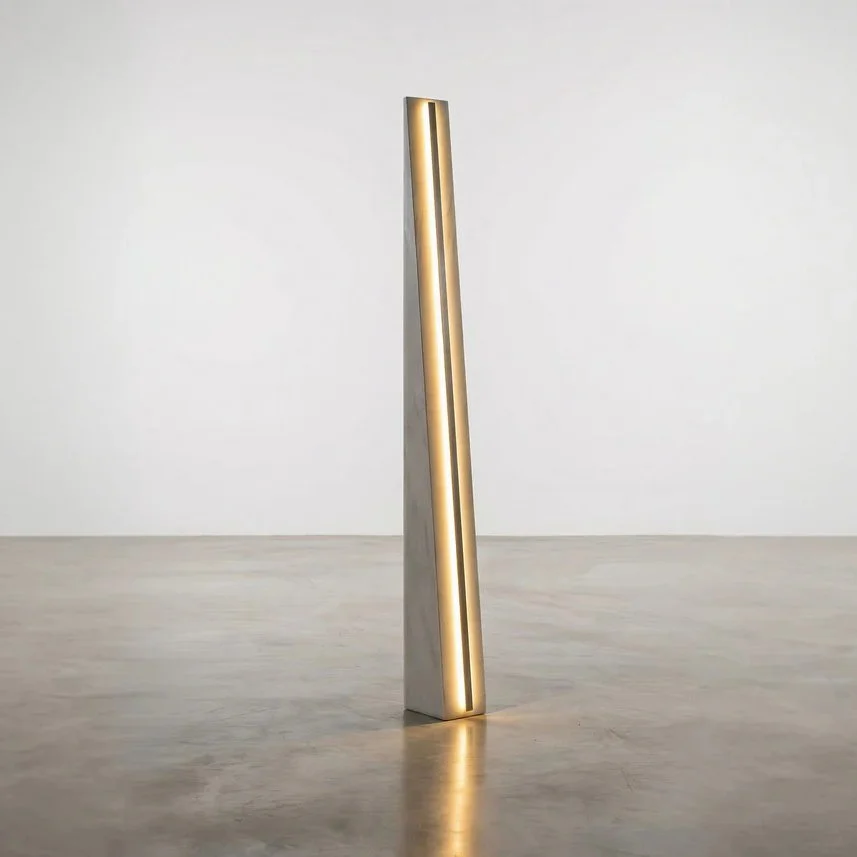
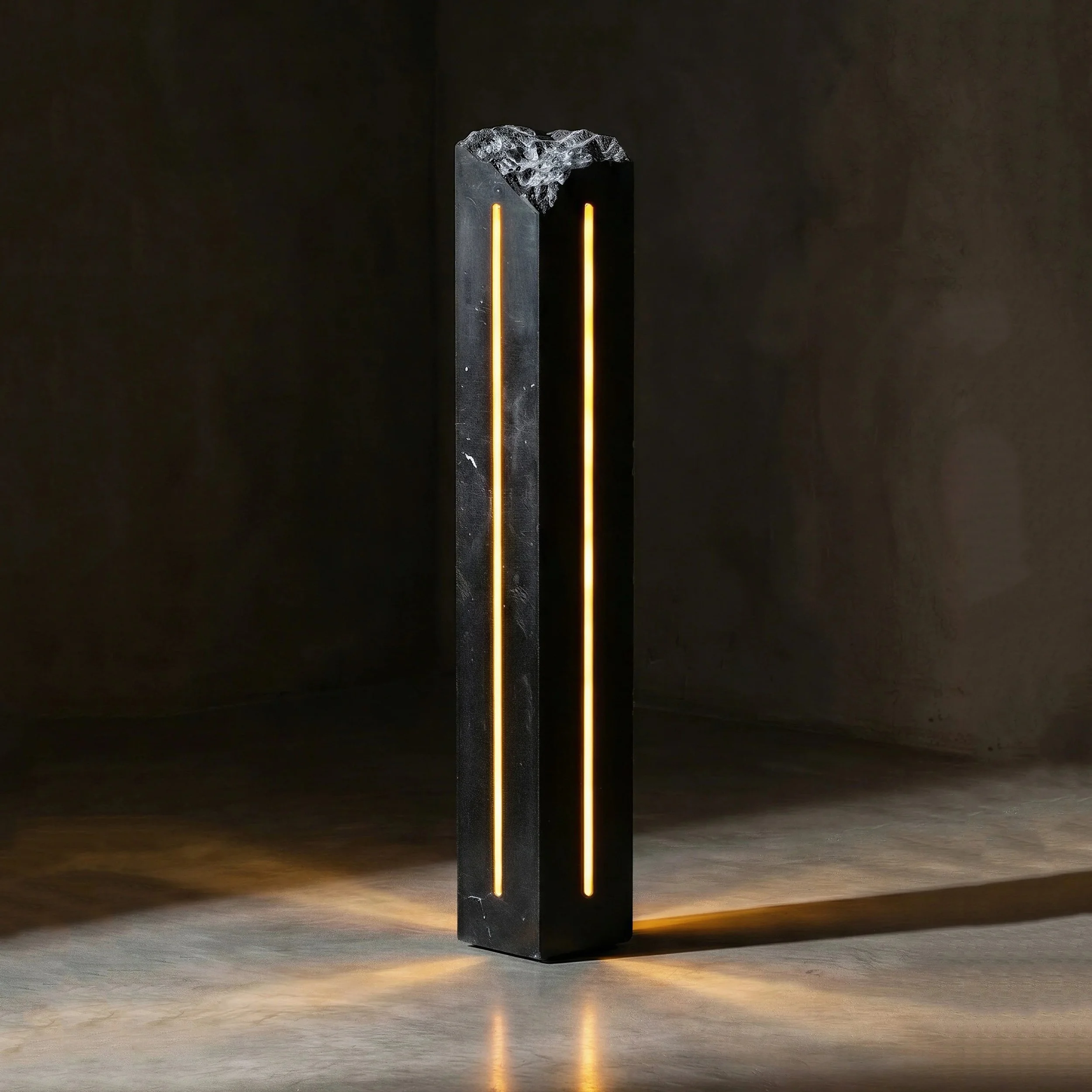
Io Prime is a tall travertine form pierced by a triangular void and bisected by a narrow plane of light. The work suggests both an ancient portal and a fragment of an unknown architecture. The sculpture functions as a threshold between the natural and the constructed, preserving the geological history of the stone even as it is transformed into an object of light. New works including Asteria and Theia continue De Paula’s exploration of the monolith as both artifact and cosmological marker. Tall, narrow black marble forms are illuminated by blue and gold lines of light.
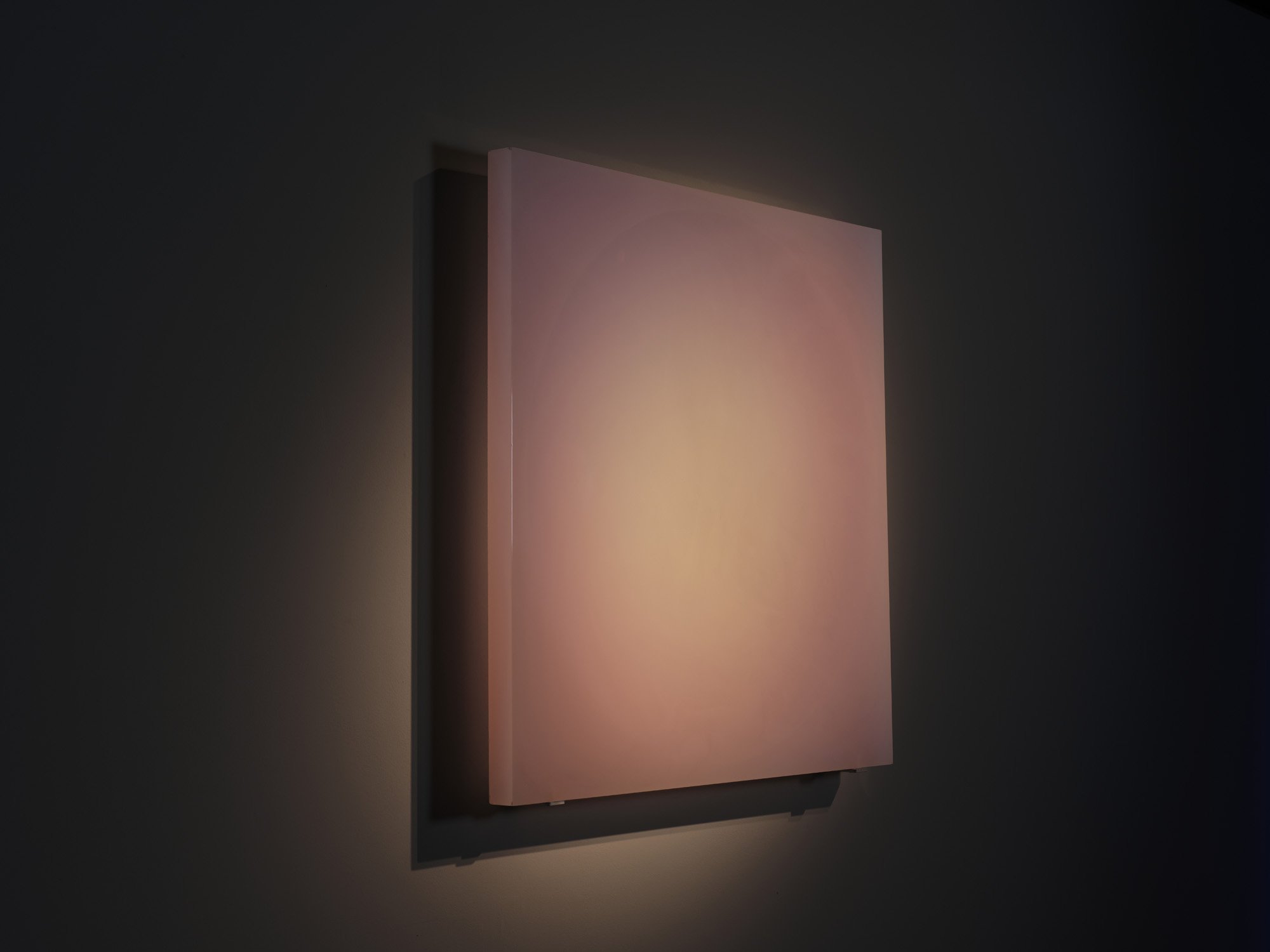
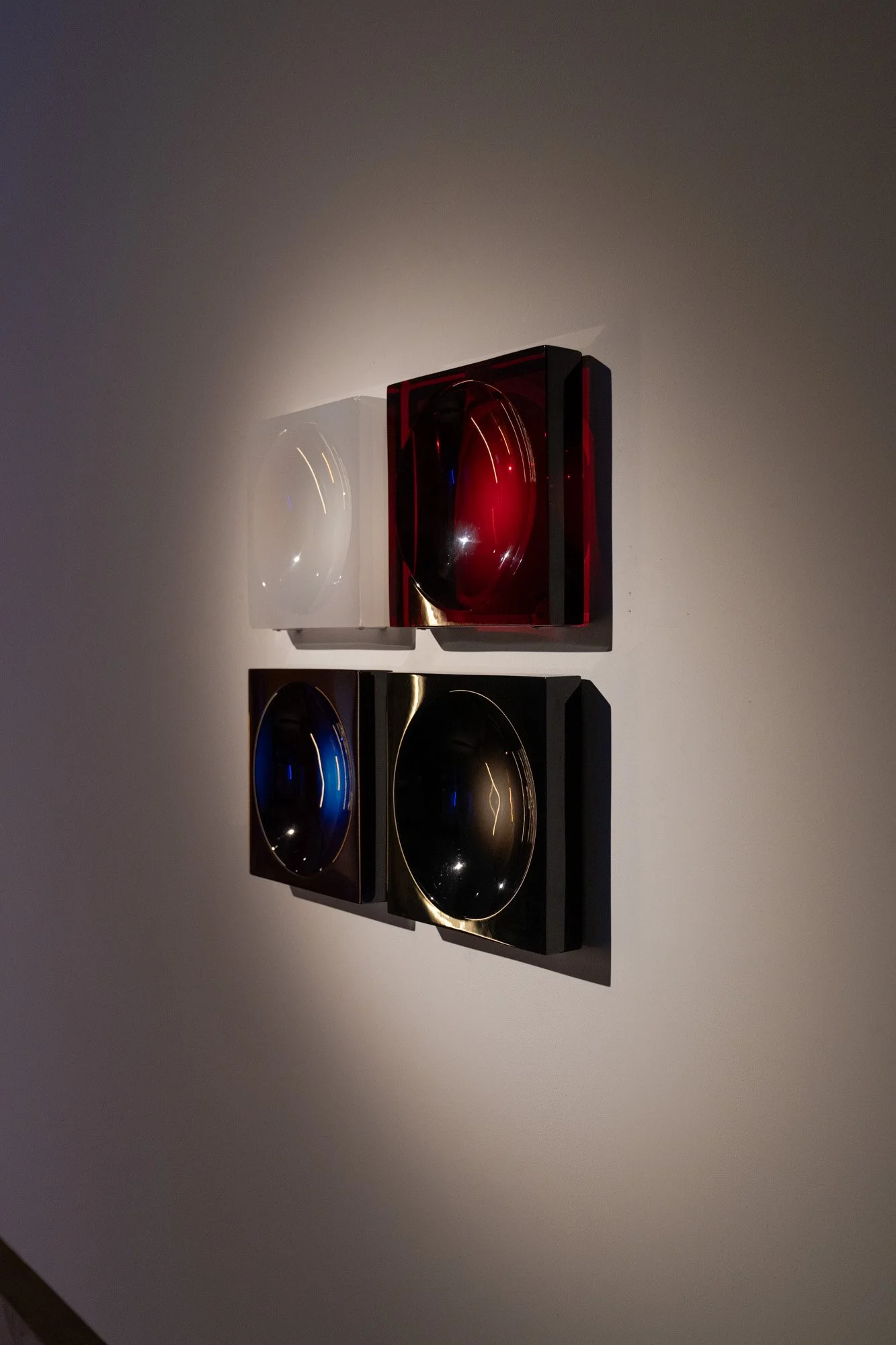
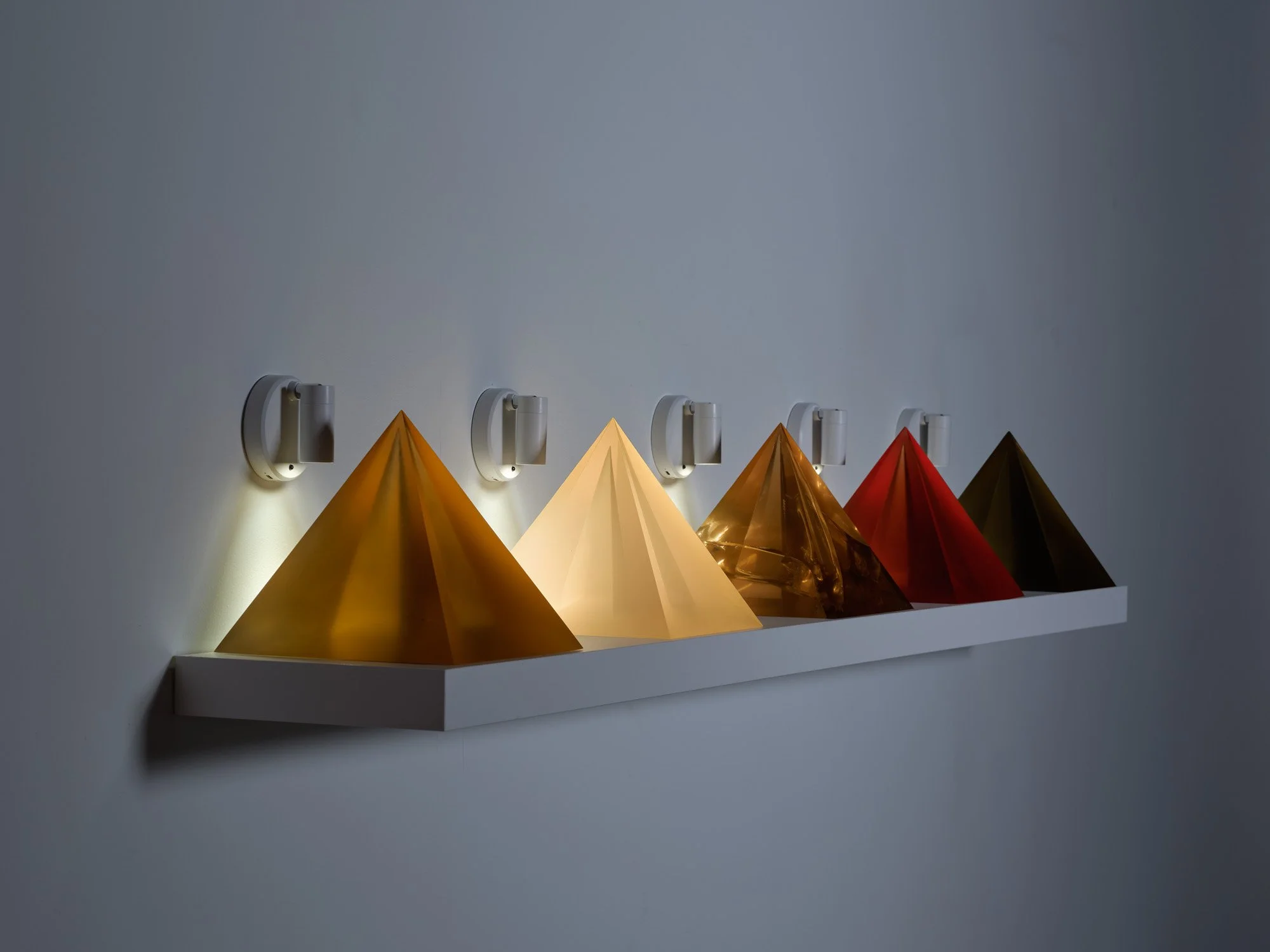
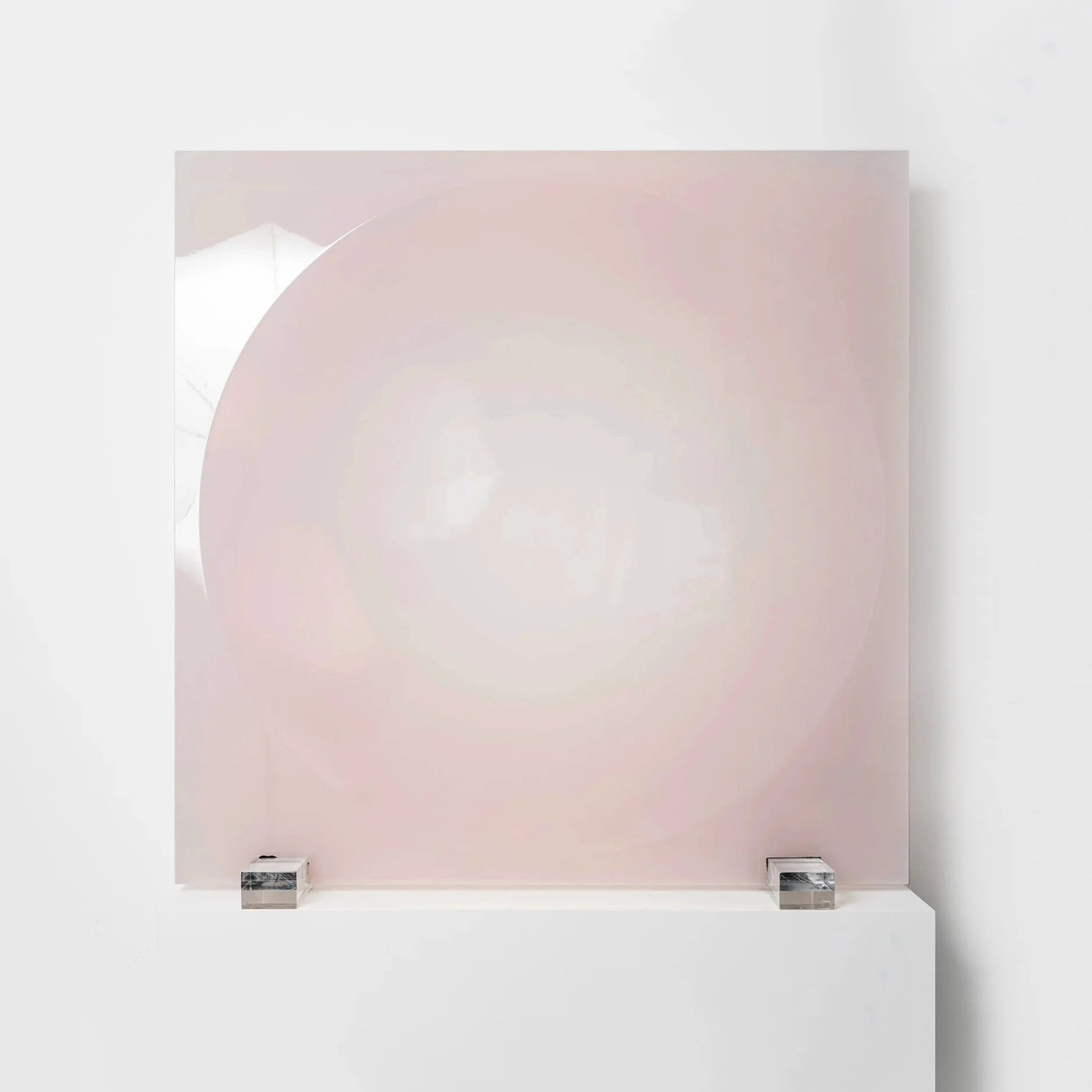
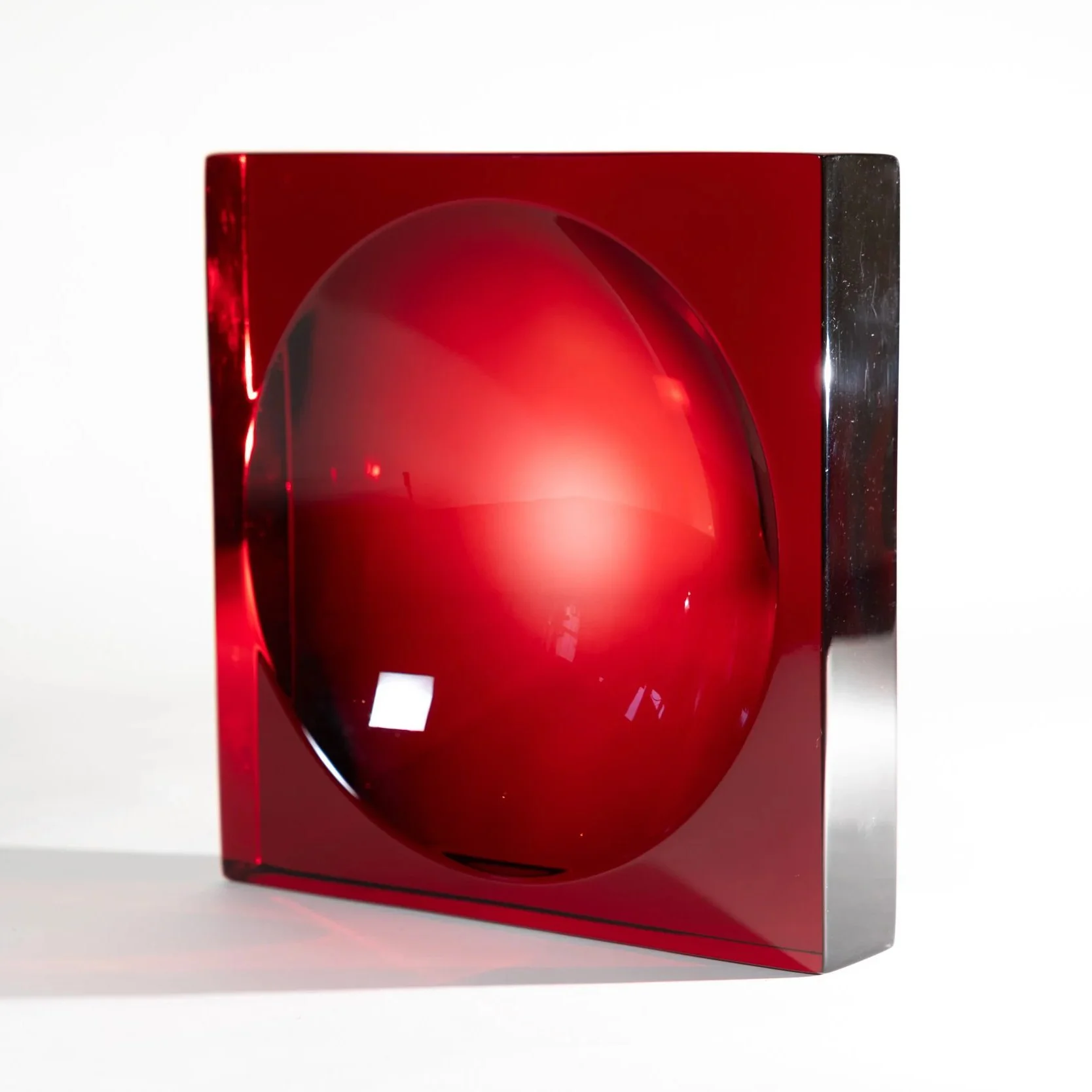
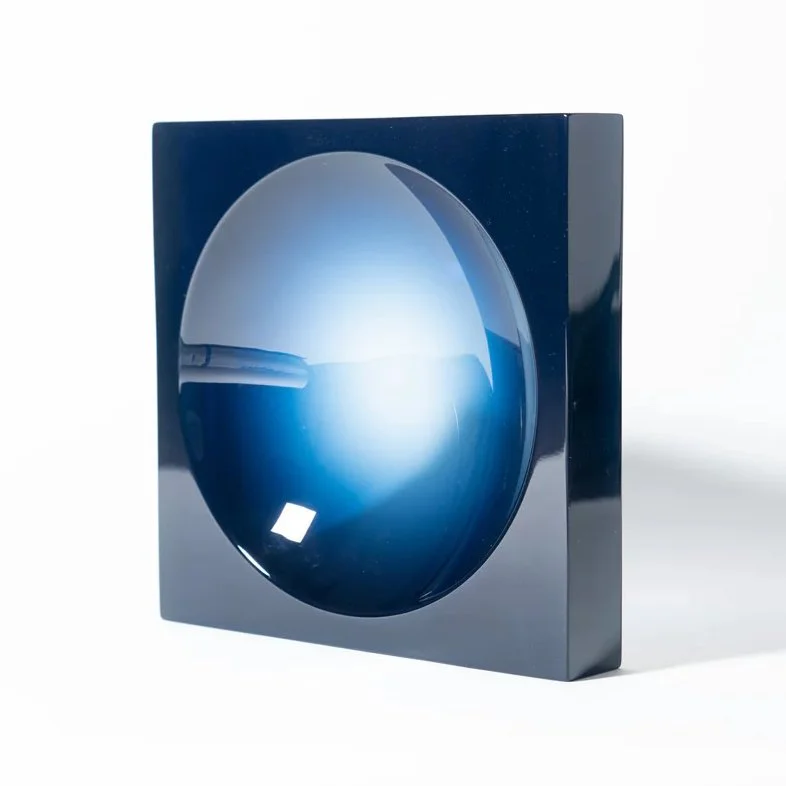
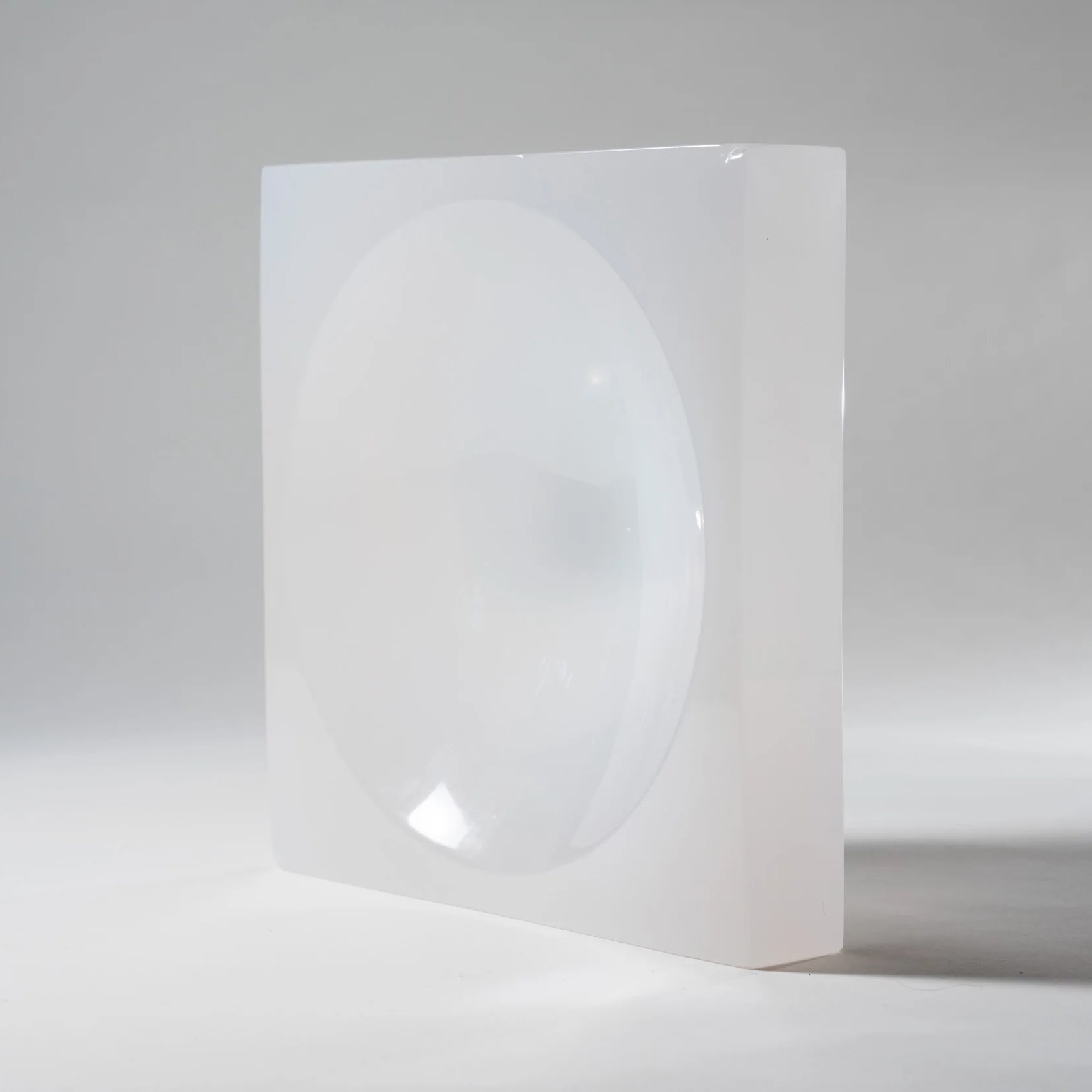
Extending his exploration of light as both medium and atmosphere, De Paula’s Parabola Series sculptures do not emit light, but manipulate it. As giant functional lenses, they warp, reflect, and refract light in ways that confuse the viewer and demand closer inspection, though they never fully reveal the illusion of what exactly the viewer is seeing.
Together, the works in Interstice consider the threshold between human time and geological time. They encourage viewers to recognize the immense age of the materials themselves and the fleeting scale of human civilization in comparison. At a moment when global instability prompts reflection on legacy and survival, De Paula’s sculptures offer a quiet reminder of both the fragility and the extraordinary uniqueness of human existence within the universe.
Collection





Artists + Designers

Press